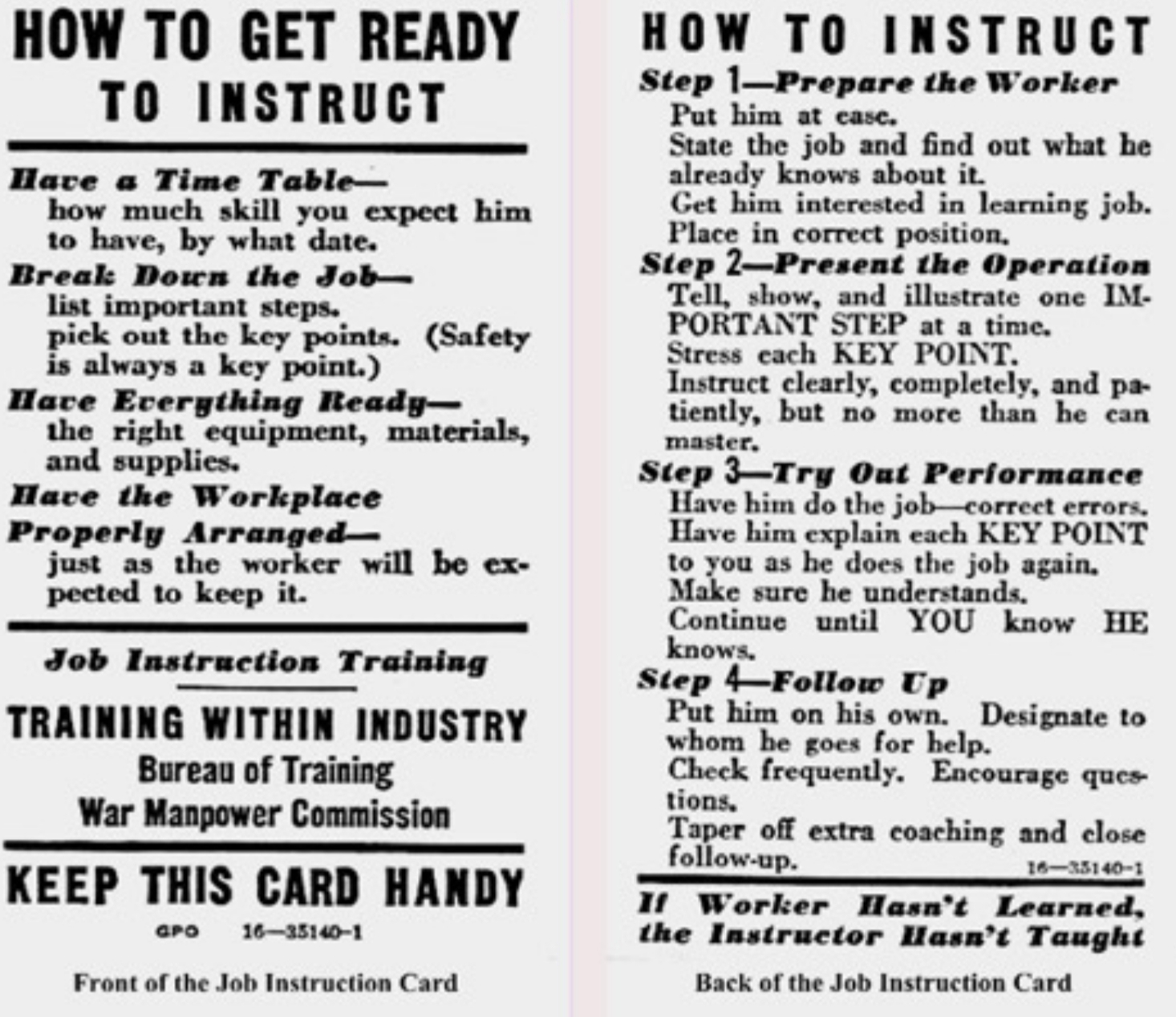
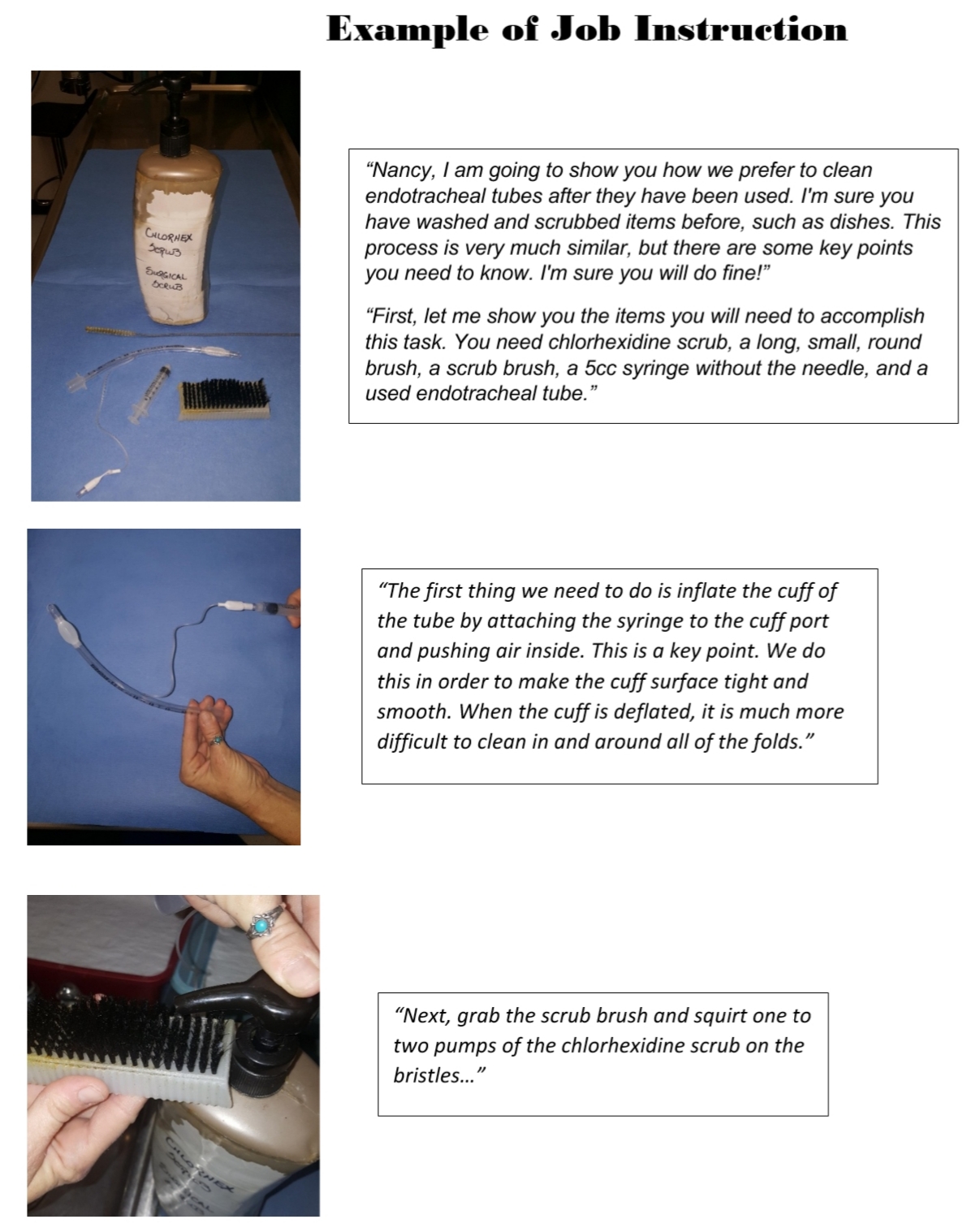
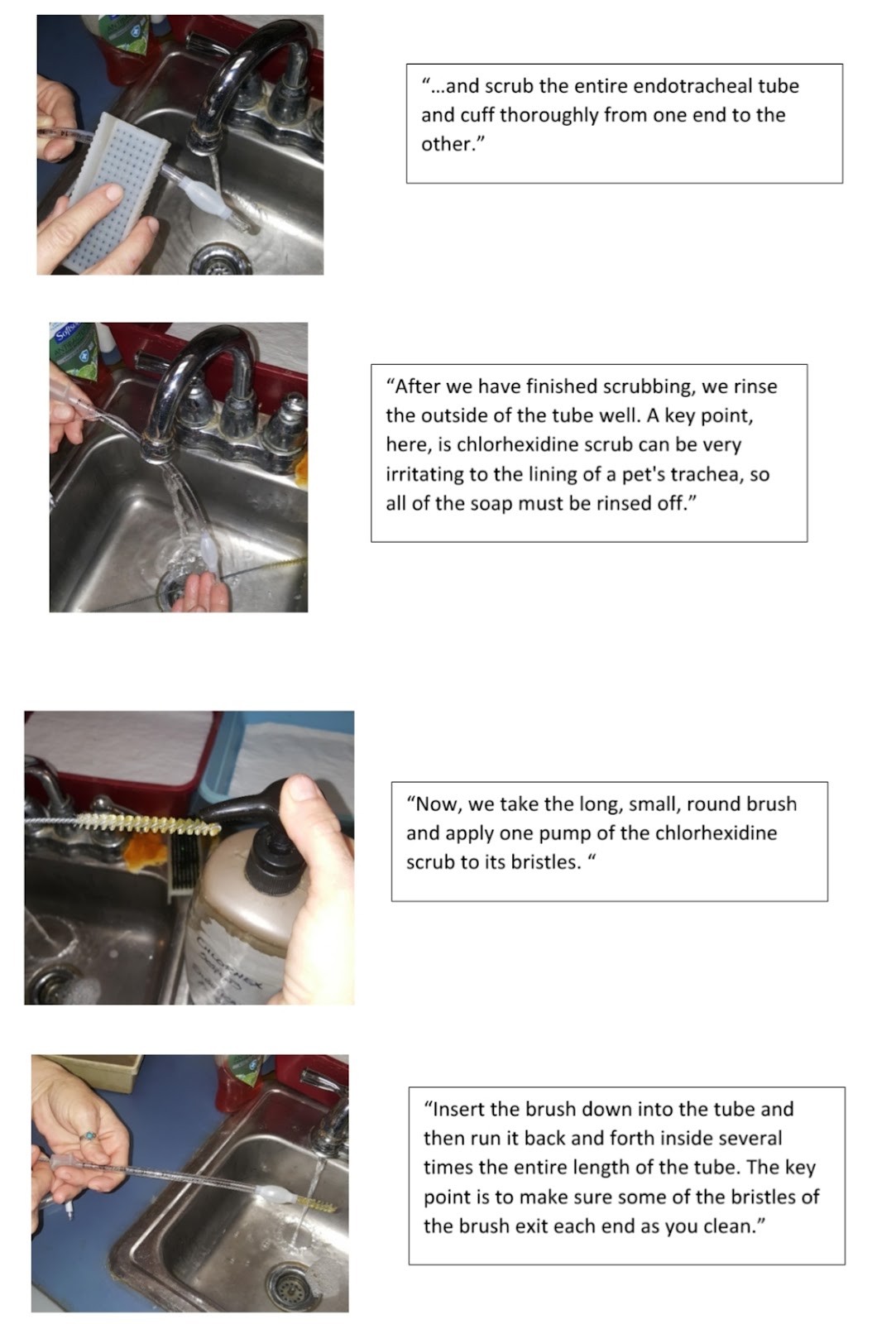
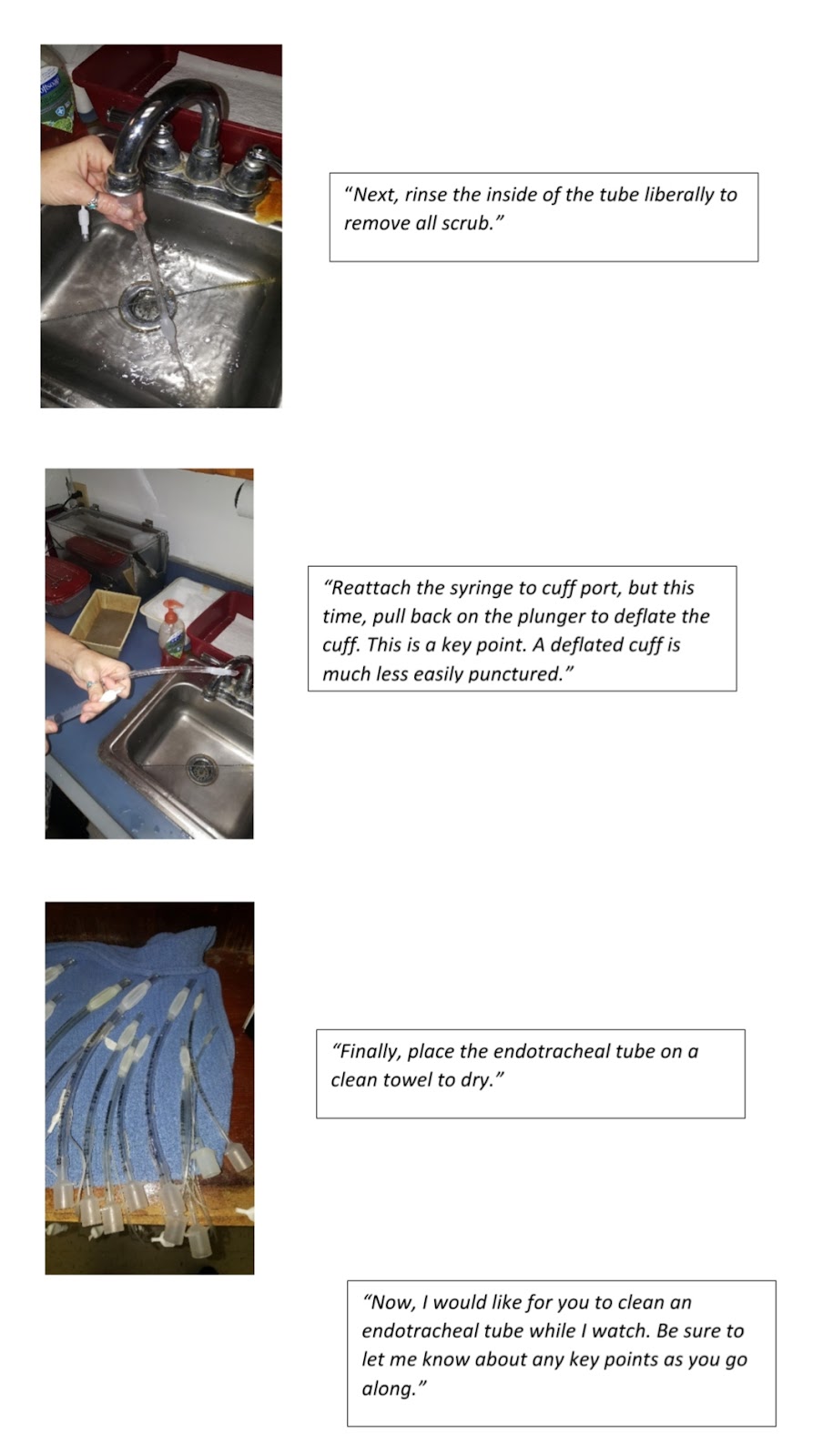
This is a continuation of the last post dealing with the training methods taught to Japan by the U.S.'s Training Within Industry after WWII. As explained in that post, the three TWI J-courses had a major influence on several of key concepts of the Toyota Production System, namely Standardized work, respect for workers and continuous improvement. But, true to Toyota’s character, they took that information, put their own “flavoring" on it, and developed what Mike Rother calls Toyota Kata.
Kata comes from the world of oriental, martial arts. It means “form.” There are two primary kata; Improvement Kata and Coaching Kata.
Toyota Improvement Kata
When we think about the distance between where we are currently and our True North (or any other challenge), it can seem immeasurable. Or, the idea of a Lean transition and all that that entails can seem overwhelming. But, handling these emotions comes down to the metaphorical concept of how to eat an elephant; one bite at a time. Improvement kata is the standardized work for taking each bite.
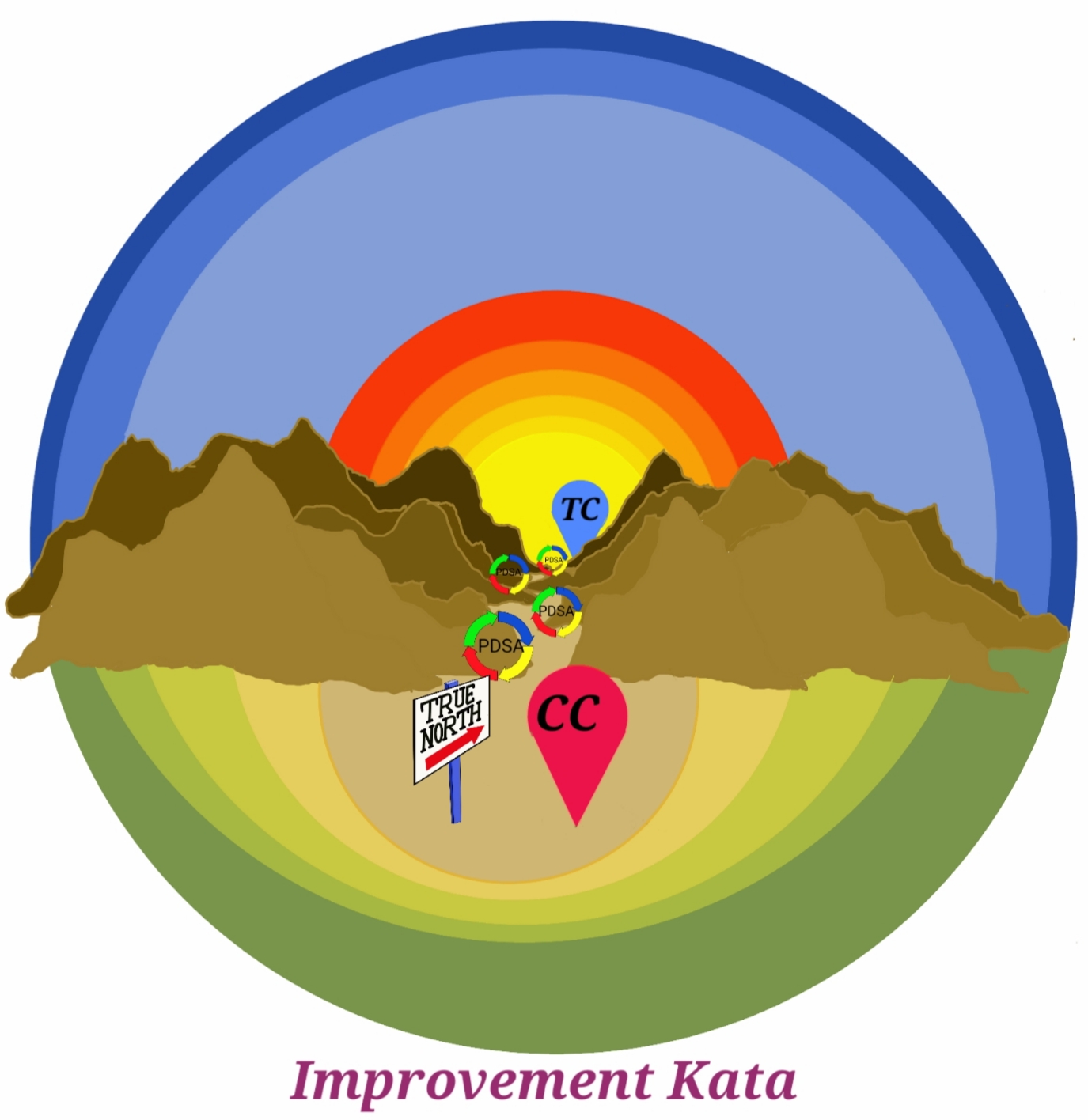
The first step is to have a good understanding of where you are going; your direction, your True North or the challenge before you. In the figure above, “CC" stands for our current condition and “TC" is the target condition. The target condition is what we feel is the next logical step on our journey to True North or our goal. Part of the journey to our next TC is clearly visible and we have a very good idea how to get that far. But, after that, there is the part that is less knowable. It is more obscure, intimidating and without a clear plan. So, how do we get through this part of the quest? We PDSA our way through it.
We make a plan, experiment and see if we get closer to out target condition. The path that this takes us on is not necessarily straight. There will probably be some “zigging" this way and “zagging" that way, but through the use of A3 thinking, we will reach our TC. One bite gone! Eventually, by continuing to identify each next successive “bite" (target condition) and repeating the process, we get closer and closer to our goal. This is the essence of the Improvement Kata.
Toyota Coaching Kata
As the name implies, the Coaching kata is the standardized work for managers to mentor and monitor individuals and groups involved in improvement kata. It consists of five questions:
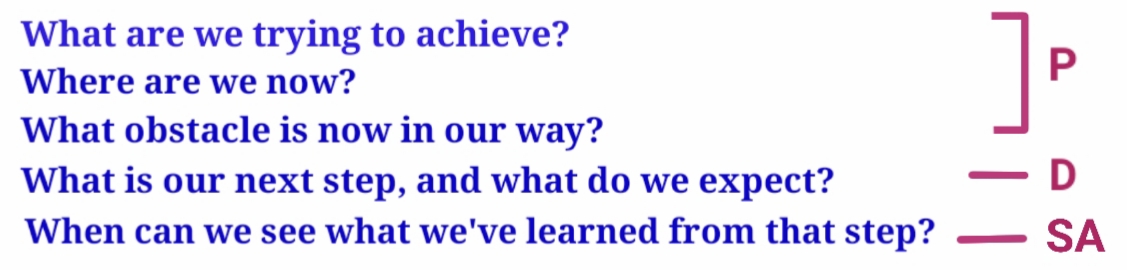
As you probably can tell, these questions are simply asking the group to visualize and verbalize the PDSA cycle.
- Where are you trying to get to? What is your direction or challenge and what is your next target?
- What is your current condition? Where are you now?
- What is one thing that is keeping you from reaching the target? What are the problems? If there are more than one, then deal with this one now, and come back to the others later.
- What countermeasures are you going to try and, if successful, what will that future state look like?
- When can we study and evaluate that experiment?
You may have several groups, each trying to reach the next target condition of their improvement project, but for you, as the coach/mentor, the questions remain basically the same. Rather than solving the problems for them, you are asking questions that will lead them, through A3 thinking, to solve their own problems, learn, and deeply understand the process. Coaching is a scheduled, periodic endeavor, much like Lean Daily Management, but less frequent. We are monitoring that the project is on task and progressing appropriately.


Thanks for reading. Your comments, suggestions, ideas and questions are always appreciated.