Showing posts with label Standardized Work. Show all posts

Monday, April 29, 2019

R-E-S-P-E-C-T

Respect for people” is a fundamental principle of Lean and a major difference between Lean and the Western, more Taylor-esque, concept of management. The Western tradition, which is still a part of educating MBAs, is that management knows best and makes all decisions. Workers are to do as they are told.

There is a quotation by Henry Ford to the effect that the problem with workers is that, not only do they come with two hands, but also, unfortunately, a brain. Workers are not hired to think! Lean is much less of a top-down style of management, and much more of a bottom-up, inclusive, transparent style. This is not to say, however, that the asylum is completely handed over to the patients.
This core belief influences the relationship Toyota managers and supervisors have with their workers. For Toyota, management’s primary function is more of teacher and less of an organizational police officer. We now understand, more than before, that the focus for Toyota is not just on building quality automobiles, it is primarily focused on the building of problem solving, innovative, respected employees who, then, build quality, innovative automobiles.

Dealing with people from a basis of respect permeates every aspect of Lean.

Systems thinking:
Have you ever had the feeling that, at some point at work, you were damned if you do and damned if you don't? Or, that you are in the the middle of a Catch-22 situation? If so, you have probably been the victim of poor systems or systems colliding with each other. That feeling of not being in control or at the mercy of things bigger than you.

Thinking in terms of systems means understanding that the systems at work within an organization are management and leadership designed. Systems are the responsibility of management. Workers have no authority to control or overhaul systems. They are at the mercy of the systems. Yet, many times, staff are blamed for what is, in actuality, a system design problem.

For example, if a job is not being performed well, systems thinking would first consider such things as does the worker know that job is their responsibility, has the worker been trained adequately, does the worker have the necessary tools, and does the worker have timely and correct information?

Systems thinking is more respectful. It recognizes that systems should be investigated when problems occur before blaming people.

The Lean definition of value is that which the client wants and is willing to pay for, and that improves the health status of the pet, without defects and waste along the way. Our clients get exactly what they want, when want it and in the amount wanted. They pay for only value adding services. The concept of defining value from the client’s point of view shows respect for them.

Variance and overburdening:
Lean understands that large variances in workload can be the source of difficulties and overburden our staff. Lean suggests work loads try to be leveled as much as possible. Being watchful for the overburdening of staff comes from respect.

The Just-In-Time (JIT) concept is the procurement and delivery of resources, (whether that be drugs, supplies, access to diagnostic equipment and information, or patients, doctors and staff) just exactly where it is needed, just exactly when it is needed, and just exactly in the amount needed. Nothing more and nothing less.
With respect to staff and personnel, the Just-In-Time idea is based, in part, on recognizing and respecting the unique value of everyone's time and skills; to only use them when, where and in the amount needed.

Standardized work is the mutually agreed upon method to do or handle a certain process or situation that helps insure quality, timeliness and safety, and gets everyone on the same page working in the same direction. It shows respect by involving staff in its definition and formal writing, and by eliminating ambiguity and the anxiety it causes to workers that come from policy and process chaos.

Kaizen is a Japanese word that can be translated to mean “good change,” “change for the better,” or “continuous improvement.”

While improvements can be large, time consuming and expensive major changes, the most common are the small, daily, quick, inexpensive ideas submitted by staff that improve quality, flow, safety, value to the client and make work life just a little easier. Staff are on the frontline of our practices every minute of every day. They know, better than anyone, where and what the problems are. And, they probably know better how to remedy them than we owners and managers do.

Kaizen shows respect by recognizing what an asset our staff is, and allowing them to partner with us in improving the practice; to be engaged and be part of the solutions, rather than always being blamed for the problems.

5S
5S projects are the physical cleaning and reorganization of a particular room or area of the practice. It helps the staff to work with less clutter, frustration and confusion on a daily basis. It creates better flow within the hospital which increase value to clients; all ways of showing respect.

Go to gemba
"Genchi Genbutsu" (go and see) means that whenever there is a problem found, all relevant stakeholders (management and staff) should go to where the problem occurs (the “gemba”) and solve it together. It shows respect by recognizing that staff have valuable input to the situation.  

On the Toyota production line, workers are provided with a mechanism to sound an alarm and ask for help anytime they find it necessary. The line stops if the problem is not quickly resolved. Toyota trains and trusts its employees to use the Andon cord when an issue of quality or safety is in question. It shows respect by creating a culture of safety and trust for anyone to speak up, even if they think there might possibly be an inkling of a concern.


It is my humble opinion that if veterinary staffs knew about and understood the Lean mindset and its worker-centric (and client-centric) philosophy, there would be such a grassroots revolution within the profession that owners, managers and corporation leadership would have no choice but to start thinking Lean within their practices. Maybe, we could start now and circumvent all of the "bloodshed."


Thanks for stopping by. Please share this blog with your contacts! And, let me know if you have any questions, comments or post ideas.

Monday, March 25, 2019

Training Within Industry: A Closer Look At the Job Instruction Course


With this post, I take a closer look at the Training Within Industry's Job Instruction course that I introduced in the post "The Origins of Lean Are Not All Japanese." One of the reasons, from a systems viewpoint, staff may not be performing well is inadequate training.

Job Instruction (JI) course

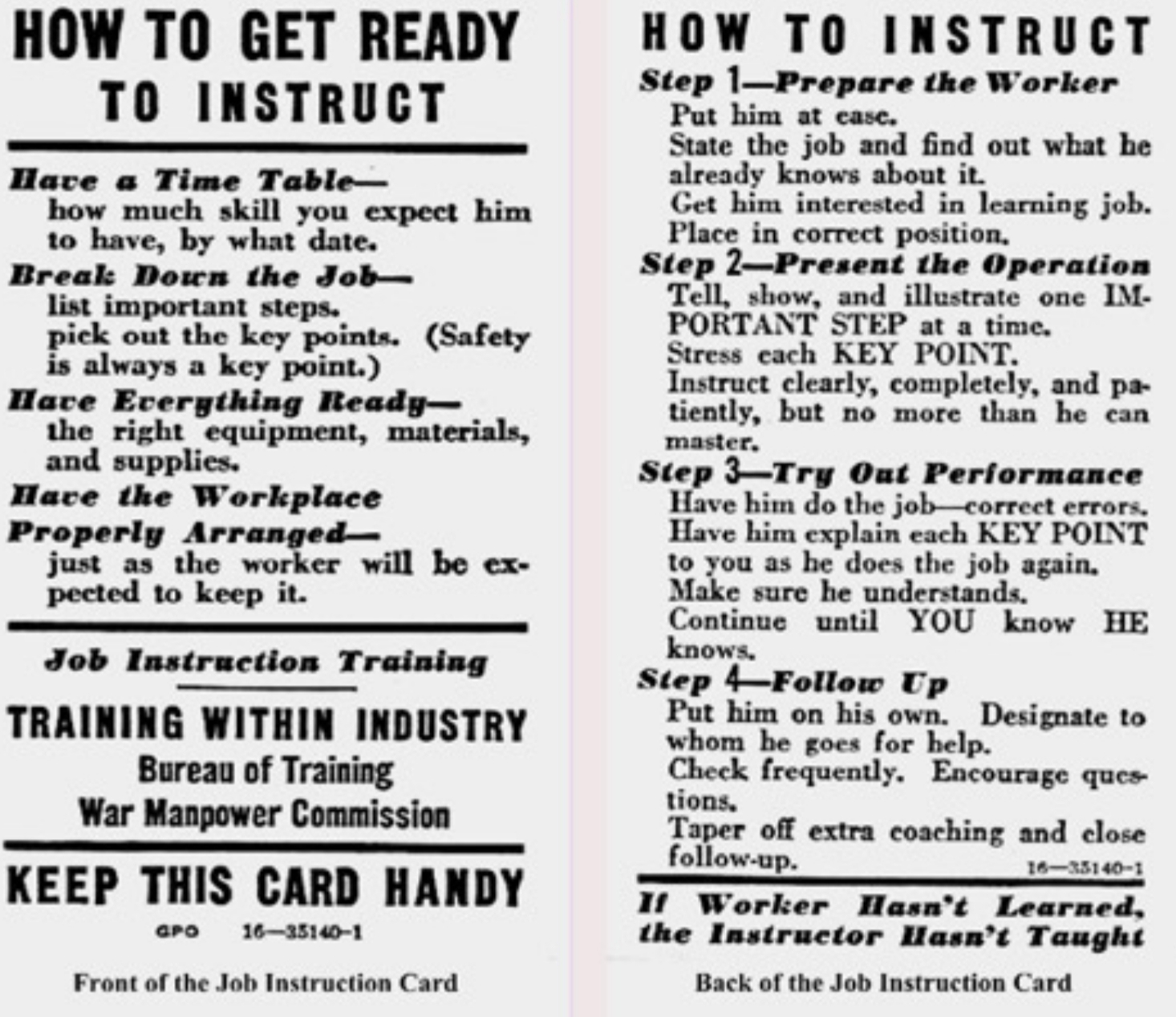
This course was designed to teach supervisors how to teach new workers. These people knew their jobs well and had a lot of experience, but many didn't understand how to teach someone else. This course showed them how to dissect the job into its individual steps and provided them with a standard way of instructing on a step-by-step basis. This was the nidus for Lean standardized work.


HOW TO GET READY
TO INSTRUCT


Have a Time Table--
   how much skill you expect him to have, by what date.

Break down the job—
   list important steps.
   pick out the key points. (Safety is always a key point.)

Have everything ready—
   the right equipment, materials and supplies.

Have the workplace properly arranged—
   just as the worker will be expected to keep it.


HOW TO INSTRUCT


Step  1—Prepare the worker
   Put him at ease.
   State the job and find out what he already knows about it.
   Get him interested in learning job.
   Place in correct position.

Step 2—Present the operation
   Tell, show and demonstrate one IMPORTANT STEP at a time.
   Stress each KEY POINT.
   Instruct clearly, completely and patiently, but no more than he can master.

Step 3—Try out performance
   Have him do the job—correct errors.
   Have him explain each KEY POINT to you as he does the job again.
   Make sure he understands.
   Continue until YOU know HE knows.

Step 4—Follow up
   Put him on his own.
   Designate to whom he goes for help.
   Encourage questions.
   Taper off extra coaching and close follow-up.

________________________________
If the Worker Hasn't Learned,
The Instructor Hasn't Taught.


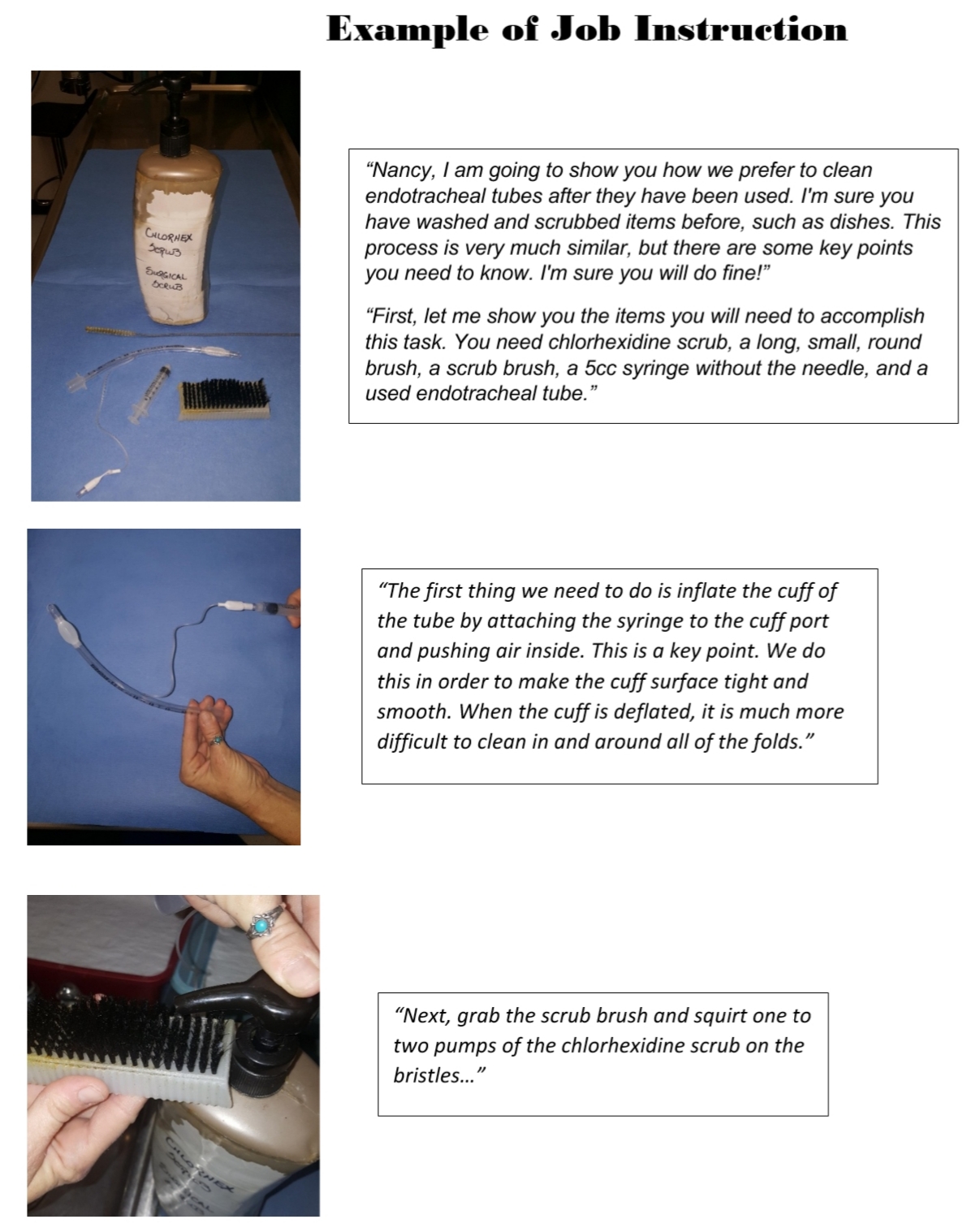
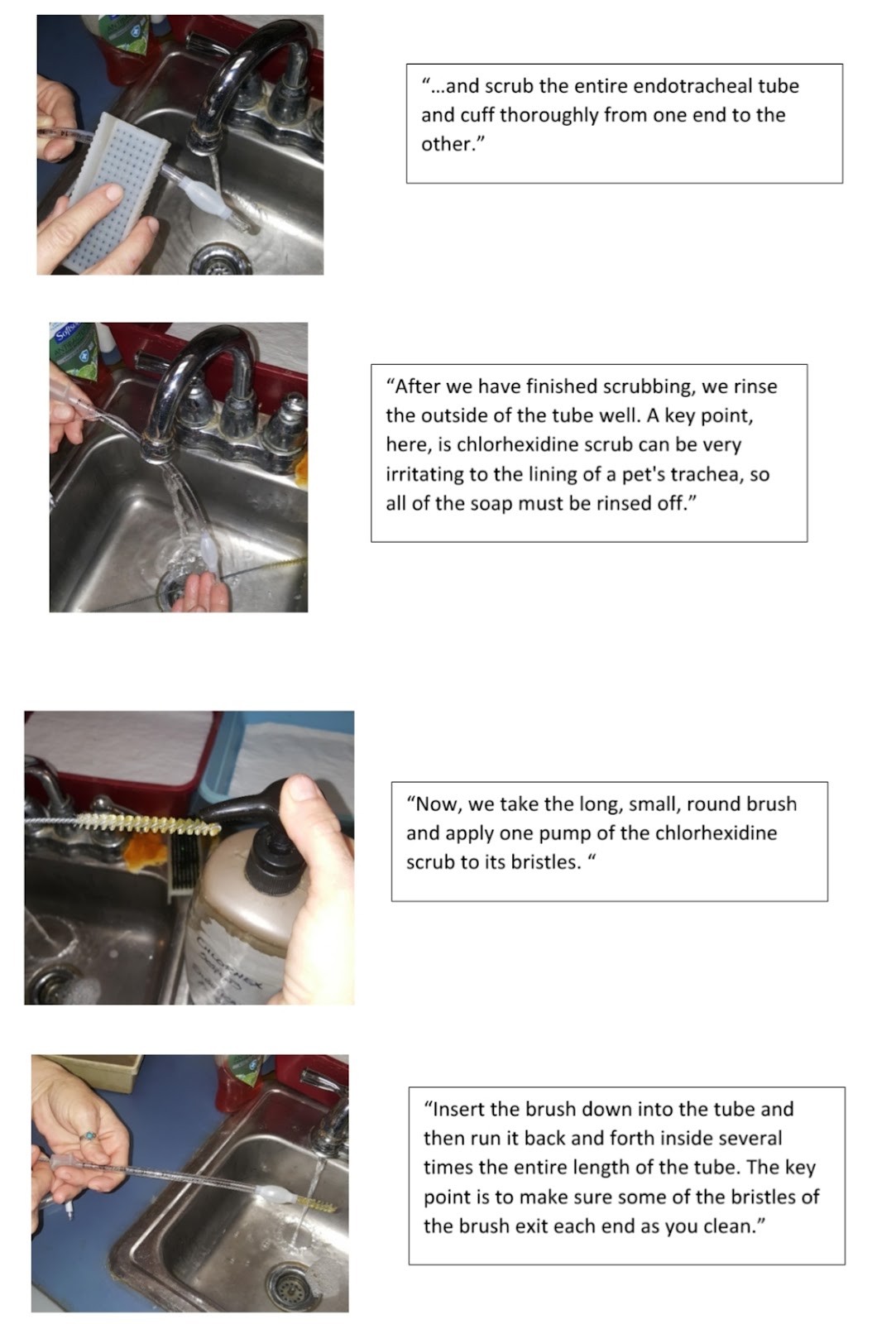
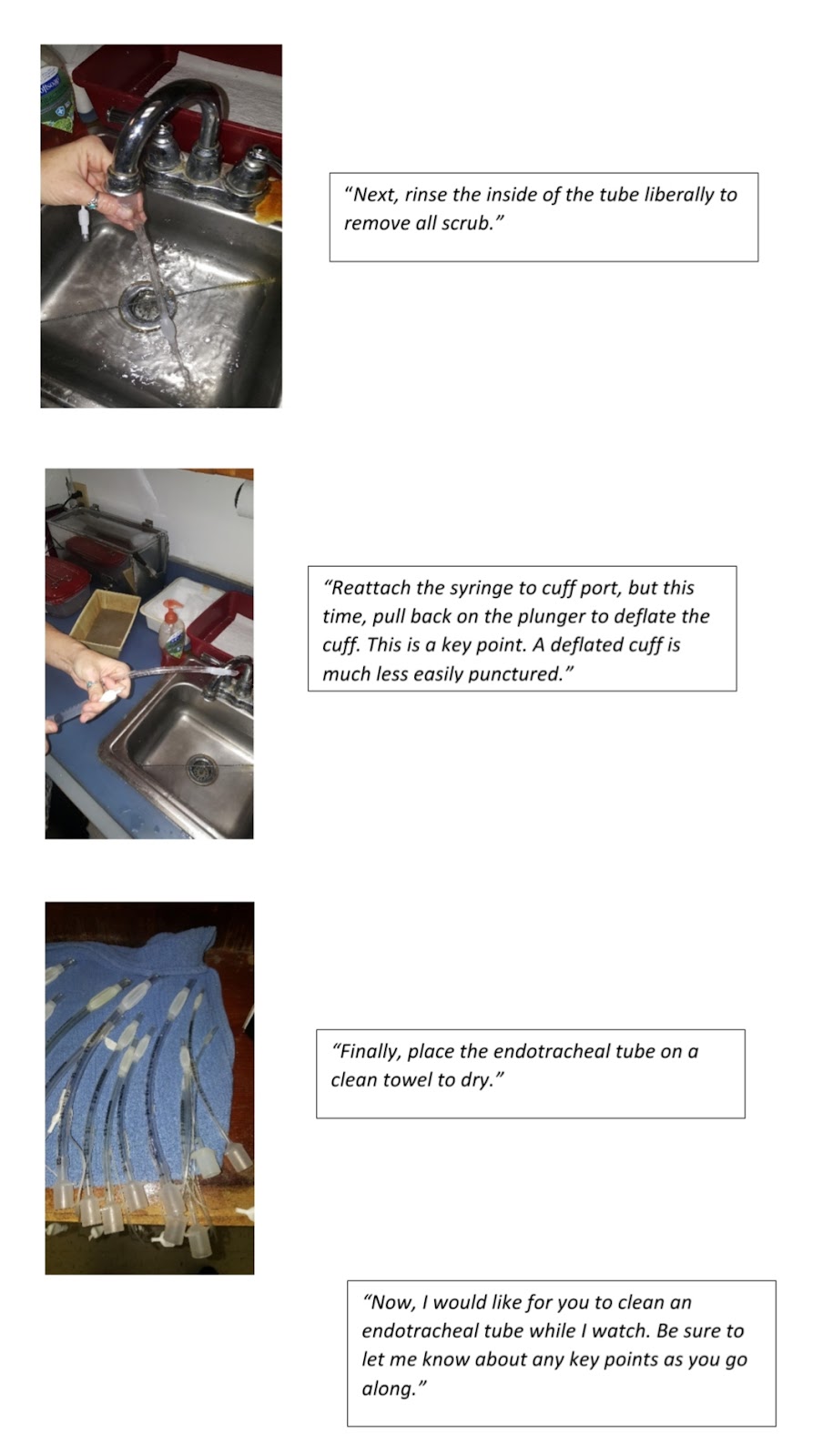
Below is an example of the Job Instruction method of teaching a new student how to clean an endotracheal tube after it has been used following our standardized work for the activity.


At this point, you can have the student go through the process another time or, if you feel confident of his ability, allow him to work independently. Be sure to praise him for his attentiveness, and give him permission to reconnect with you at any time for any additional assistance he may need.

As explained in the earlier post referenced above, the three TWI J-courses had a major influence on several of key concepts of the Toyota Production System, namely Standardized Work, respect for workers and continuous Improvement. But, true to Toyota’s character, they took that information, put their own “flavoring" on it, and developed what Mike Rother calls Toyota Kata.

Kata comes from  the world of oriental, martial arts. It means “form.” There are two primary kata; Improvement Kata and Coaching Kata. I will look at Toyota Kata in the next post.


Thanks for stoping by. If you enjoy and learn from this blog, please tell a friend or colleague. And, as always, comments always appreciated.

Sunday, February 3, 2019

The Origins of Lean are Not All Japanese

Over the past few years, while discussing what Lean is with people, I have had one or two of them make comments to the effect that they weren’t interested in learning about anything coming from Japan (or any other foreign country!).

Now, while it is true that Lean did come from Toyota via the Toyota Production System (TPS) and Toyota developed this in Japan, much of what originally went into it came from the good ole' U.S. of A.

There were four primary entities from the United States that had an influence on and are responsible for a very large part of what came to be TPS. They are:

1. Henry Ford and Ford Motor Company
2. W. Edwards Deming 
3. Training Within Industry (TWI)
4. 1950s U.S. grocery stores


Henry Ford

The first influence came from Henry Ford's idea of the assembly line and mass production, allowing the increased manufacturing of identical products by several orders of magnitude. 

These concepts included highly standardized parts, which also allowed for the quick replacement of defective parts with identical replacements, which saved time. But, the mindset was still based on inspecting and repairing defects after the fact instead of preventing defects, as Toyota had already been focusing on. 

Not to mention that most of these defects weren't caught until the whole auto had been built, so sometimes it was just as easy to scrap the car altogether. 

But, what the heck! America was victorious after the war and had plenty of returning workers and plentiful resources. What’s a few thousand defective products and the time and labor to fix the situation? Japan was a defeated country with a scarcity of resources, which required them to be more creative.

Toyota, as well as the rest of the world learned from Ford as he started the mass production assembly line. However, they would tweak it quite a bit in the years to come. And, others would learn that Lean applies in environments that are not moving assembly lines.


W. Edwards Deming 


In recent years, a Toyota executive said:

"There is not a day I don’t think about what Dr. Deming meant to us. Deming is the core of our management.”

W. Edwards Deming was an engineer, mathematical physicist, and statistician during the twentieth century, becoming one of the greatest quality gurus of all time. In 1947, Dr. Deming was asked by the United States to go to Japan to help with the census during the post war restoration efforts. While he was there in that capacity, he gave a series of lectures on quality and process control to the Japanese Union of Scientists and Engineers. They eagerly incorporated his material into their thinking. The Deming Prize is still given out in Japan for examples of the highest quality organizations.

The PDSA (or PDCA) cycle is also known as the Shewhart cycle (or the Deming cycle)

From Dr. Deming, Japan and Toyota learned about building quality into the product at the gemba, the PDCA cycle and systems thinking.


Training Within Industries (TWI)

When the United States decided to enter World War II, most all able bodied men were ushered into military service. This left a large deficit in the workforce population, especially at a time when the military industrial complex was gearing up. In order to replace this workforce, women were recruited to fill these positions. Think of “Rosie the Riveter.”


The problem, of course, was that these new hires had little to no training in industry. Because the need was so immediate, the war department started the Training Within Industry (TWI) program.

Training Within Industry was a predominately volunteer program to help get new workers up to speed as quickly as possible. Many of the TWI trainers were loaned to the project by manufacturers, which continued to pay their salaries.

No manufacturing company was forced to utilize the TWI program. They had to request TWI help, and many did. There were also cases where TWI was used in healthcare.

There were four training programs offered at different times called the Jobs programs. These included the Jobs Instruction (JI) course, the Jobs Methods (JM) course, the Jobs Relations (JR) and, later, the Jobs Safety (JS) course. 

The program was very successful and contributed greatly to the United States being among the victors. When the war was over and the United States was helping to rebuild Japan, the TWI programs were exported. Manufacturers, including Toyota, enthusiastically incorporated the concepts into their own cultures. There is still a copy of an original TWI manual in the Toyota company museum. 

Once the war was over, the War Department ended the TWI program, the men returned to their jobs, the industrial revolution was on its way, resources were plentiful, manufacturers didn't see the need of TWI in their companies and interest in TWI dwindled to almost nothing. In recent years, however, there has been a renewed excitement in the old programs and methods.

The TWI Job Instruction (JI) course
This course was designed to teach supervisors how to teach new workers. These people knew their jobs well and had a lot of experience, but many didn't understand how to teach someone else. This course showed them how to dissect the job into its individual steps and provided them with a standard way of instructing on a step-by-step basis. This was the nidus for TPS's standardized work.


Training cards (as shown above and below) for each of the “J" courses were given to students to constantly refer to when dealing with their workers at their jobsite. This was necessary to protect the uniformity and integrity of the material throughout the project.

The TWI Job Methods (JM) course 


Job Methods taught how to improve the work being done. It was the impetus for kaizen or continuous improvement.

The TWI Job Relations (JR) course


The Job Relations course instructed supervisors how the deal with interpersonal relationships and conflicts. Toyota's commitment to the respect of workers and people came from this information.


These early concepts eventually evolved into Toyota's Improvement Kata and the Coaching  Kata. These are the standardized work of how managers and supervisors teach and mentor their direct reports.


1950s United States Grocery Stores 

Toyota executives who had come to the United States to observe and learn were intrigued by the way our grocery stores replenished their shelves at night with only those items that had sold that day. By the next morning, when the store reopened, the shelves were full for customers to purchase and the cycle repeated. 

Very little inventory was kept in the back of the store which cut down on costs to warehouse a large inventory and the capital tied up in that merchandise. All of this appealed to a small company in a small, recovering country. Just-In-Time thinking was born from this U.S. grocery store concept


While there is definitely an Eastern philosophical hue to the Toyota Production System, the roots of much of the mindset, especially what we would consider the major concepts, originated from the United States. But, keep in mind that Toyota is not the same as every Japanese company. They've worked hard to create a special culture -- they've been willing to learn from other countries. How about you?


Thank you for stopping by. Comments always welcome.


Wednesday, June 28, 2017

Sayings of the Lean Fathers


Within the body of Jewish literature,  there is a book called "Pirke Avot", which means 'Sayings of the Fathers'. It is a collection of wisdom and quotes handed down from the ancient rabbis and the Jewish tradition. Taking that reference as a model, I decided to produce this "Sayings of the Lean Fathers." Enjoy!

Taiichi Ohno

(February 29, 1912 – May 28, 1990) was a Japanese industrial engineer and businessman. He is considered to be the father of the Toyota Production System, which became Lean Manufacturing in the U.S. He devised the seven wastes (or muda in Japanese) as part of this system. He wrote several books about the system, including Toyota Production System: Beyond Large-Scale Production.   https://es.wikipedia.org/wiki/Taiichi_Ohno 

We are doomed to failure without a daily destruction of our various preconceptions.

Progress cannot be generated when we are satisfied with existing situations.

Start from need.

Having no problems is the biggest problem of all.

If you assume that things are all right the way they are, you can’t do Kaizen. So change something!

Ask 'why' five times about every matter.

Why not make work easier and more interesting, so people do not have to sweat? The Toyota style is not to create results by working hard. It is a system that says there is no limit to people’s creativity. People don’t go to Toyota to ‘work’, they go there to ‘think’.

Without standards, there can be no improvement.

Where there is no Standard there can be no Kaizen.

Standards should not be forced down from above but rather set by the production workers themselves.

Make your workplace into showcase that can be understood by everyone at a glance. In terms of quality, it means to make the defects immediately apparent. In terms of quantity, it means that progress or delay, measured against the plan, is made immediately apparent. When this is done, problems can be discovered immediately, and everyone can initiate improvement plans.

The slower but consistent tortoise causes less waste and is more desirable than the speedy hare that races ahead and then stops occasionally to doze. The Toyota Production System can be realized only when all the workers become tortoises.

All we are doing is looking at the time line, from the moment a customer gives us an order to the point we collect the cash. And, we are reducing the time line by reducing the non-value-added wastes.

Something is wrong if workers do not look around each day, find things that are tedious or boring, and then rewrite the procedures. Even last month's manual should be out of date.

The more inventory a company has, the less likely they will have what they need.
We are doomed to failure without a daily destruction of our various preconceptions.

The key to the Toyota Way and what makes Toyota stand out is not any of the individual elements…But what is important is having all the elements together as a system. It must be practiced every day in a very consistent manner, not in spurts.

If you are going to do TPS you must do it all the way. You also need to change the way you think. You need to change how you look at things.

The only place that work and motion are the same thing is the zoo where people pay to see the animals move around.

People who can’t understand numbers are useless. The gemba where numbers are not visible is also bad. However,  people who only look at numbers are the worst of all.


Taiichi Ohno. (n.d.). AZQuotes.com. Retrieved June 16, 2017, from AZQuotes.com Web site: http://www.azquotes.com/quote/731341
https://www.slideshare.net/mobile/optimaltransformation/a-collection-of-quotes-from-taiichi-ohno
Https//www.inspiringquotes.us/author/2150-taaichi-ohno


W. Edwards Deming

(October 14, 1900 – December 20, 1993) was an American engineer, statistician, professor, author, lecturer, and management consultant. Educated initially as an electrical engineer and later specializing in mathematical physics, he helped develop the sampling techniques still used by the U.S. Department of the Census and the Bureau of Labor Statistics. In his book, The New Economics for Industry, Government, and Education, Deming championed the work of Walter Shewhart, including statistical process control, operational definitions, and what Deming called the "Shewhart Cycle" which had evolved into PDSA (Plan-Do-Study-Act). This was in response to the growing popularity of PDCA, which Deming viewed as tampering with the meaning of Shewhart's original work. Deming is best known for his work in Japan after WWII, particularly his work with the leaders of Japanese industry.    https://en.wikipedia.org/wiki/W._Edwards_Deming

People are entitled to joy in work.

Management by results -- like driving a car by looking in rear view mirror.

It is not necessary to change. Survival is not mandatory.

The greatest waste in America is failure to use the abilities of people.

The moral is that it is necessary to innovate, to predict needs of the customer, give him more. He that innovates and is lucky will take the market.

The consumer is the most important point on the production-line.

Export anything to a friendly country except American management.

Whenever there is fear, you will get wrong figures.

A bad system will beat a good person every time.

To manage one must lead. To lead, one must understand the work that he and his people are responsible for.

Does experience help? No! Not if we are doing the wrong things.

The supposition is prevalent the world over that there would be no problems in production or service if only our production workers would do their jobs in the way that they were taught. Pleasant dreams. The workers are handicapped by the system, and the system belongs to the management.

Defects are not free. Somebody makes them, and gets paid for making them.

Every system is perfectly designed to get the results it gets.

A leader is a coach, not a judge.

Pay is not a motivator.

The merit rating nourishes short-term performance, annihilates long-term planning, builds fear, demolishes teamwork, [and] nourishes rivalry and politics. It leaves people bitter, crushed, bruised, battered, desolate, despondent, dejected, feeling inferior, some even depressed, unfit for work for weeks after receipt of rating, unable to comprehend why they are inferior. It is unfair, as it ascribes to the people in a group differences that may be caused totally by the system that they work in.

Quality is made in the board room. A worker can deliver lower quality, but she cannot deliver quality better than the system allows.

http://quotes.deming.org/authors/W._Edwards_Deming


Shigeo Shingo

 (1909 - 1990), born in Saga CityJapan, was a Japanese industrial engineer who is considered as the world’s leading expert on manufacturing practices and the Toyota Production System.      https://en.wikipedia.org/wiki/Shigeo_Shingo

Lean is a way of thinking- not a list of things to do.

The most dangerous kind of waste is the waste we do not recognize.

Are you too busy for improvement? Frequently, I am rebuffed by people who say they are too busy and have no time for such activities. I make it a point to respond by telling people, look, you’ll stop being busy either when you die or when the company goes bankrupt.

Unless you change direction, you will end up where you are headed.

We have to grasp not only the Know-How but also 'Know Why', if we want to master the Toyota Production System.

Those who are not dissatisfied will never make any progress.

There are four purposes of improvement: easier, better, faster, and cheaper. These four goals appear in the order of priority.

A relentless barrage of 'why’s' is the best way to prepare your mind to pierce the clouded veil of thinking caused by the status quo. Use it often.

Shigeo Shingo. (n.d.). AZQuotes.com. Retrieved June 18, 2017, from AZQuotes.com Web site: http://www.azquotes.com/quote/731329


Masaaki Imai

(born, 1930) is a Japanese organizational theorist and management consultant, known for his work on quality management, specifically on Kaizen.     https://en.wikipedia.org/wiki/Masaaki_Imai

The message of the Kaizen strategy is that not a day should go by without some kind of improvement being made somewhere in the company.


The Kaizen Philosophy assumes that our way of life - be it our working life, our social life, or our home life - deserves to be constantly improved.

It is impossible to improve any process until it is standardized. If the process is shifting from here to there, then any improvement will just be one more variation that is occasionally used and mostly ignored. One must standardize, and thus stabilize the process, before continuous improvement can be made.

Progress is impossible without the ability to admit mistakes.

The standard is not written on the stone. The definition of the standard is that it is the best way to do the job for now. It should be regarded as a next step to make further improvement.

Where there is no standard, there can be no improvement. For these reasons, standards are the basis for both maintenance and improvement.

Kaizen means ongoing improvement involving everybody, without spending much money.

I believe that management should focus on two particular areas. One is Gemba (shop floor) and the other is customer (not the shareholder).

You can't do kaizen just once or twice and expect immediate results. You have to be in it for the long haul.

All of management's efforts for Kaizen boil down to two words: customer satisfaction.

I have a theory that among the large Western companies (mostly American) the higher an executive is promoted, the more wisdom is lost and by the time he or she reaches the top becomes a complete idiot. Certainly they do not deserve the outrageous salary.

Japanese management practices succeed simply because they are good management practices. This success has little to do with cultural factors. And the lack of cultural bias means that these practices can be - and are - just as successfully employed elsewhere.

Kaizen is like a hotbed that nurtures small and ongoing changes, while innovation is like magma that appears in abrupt eruptions from time to time.

Under the lean system, any tools which are required for solving problems are used.

Masaaki Imai. (n.d.). AZQuotes.com. Retrieved June 18, 2017, from AZQuotes.com Web site: http://www.azquotes.com/quote/1555116

Final Thoughts


Can you recognize some themes here? Do any of this quotes resonate with you? Maybe one or more hits a little closer to home?! Which ones are you going to take with you and/or share with others? Did any challenge your previous mindset?


Thanks for stopping by. Tell your friends about us and, please, leave any comments and questions you may have.

Sunday, January 1, 2017

Systems, Value, Flow and Respect

Part of the mindset of thinking Lean is seeing and understanding your practice as a collection of systems. Individually, they seem appropriate and functional. However, many times our different systems unintentionally “bump” into each other. When this happens, chaos and waste can result.

Consider this collection of systems found in veterinary practice:

A multi-doctor practice operates on a “base or percent of production” format to pay associate doctors. The base salary is low to encourage production. Very typical within our industry. However, there are some problems.

First, the paperless computer system is slow and the doctors are required to input not only their original medical notes, but also generate any necessary supplementary reports and summaries. 

Tech staff are not allowed to have anything to do with inputting any part of the medical records other than a simple history, primary complaint, weight, temp, pulse and respiratory rate (TPR). They are not permitted to enter any of the physical exam findings, test results, diagnoses (differential or definitive), treatment orders or client home instructions. 

It is estimated that for every minute spent by doctors seeing patients, at least one other minute is needed to perform this non-value adding work.

Appointments are capped at two 20-minute appointments per hour per doctor. By the time the client is checked in by the receptionist, escorted to the exam room by a tech, and subjective information entered into the (sometimes mind-numbingly slow) computer system, the doctor notified of the appointment and briefed, half, or more, of the 20-minute time has passed.

There are four exam rooms for two doctors seeing appointments. The doctors (and, therefore, the exams rooms) are appointed at the same times each hour, i.e. at the :00 mark and at the :40 mark.

Tech staff are not allowed to have anything to do with entering any part of the medical records other than a simple history, primary complaint, weight, temp, pulse and respiratory rate (TPR). They are not permitted to enter any of the physical exam findings, test results, diagnoses (differential or definitive), treatment orders or client home instructions.

Systems thinking. As one can probably figure out, with only 60 minutes in an hour and every 20-minute appointment actually consuming 40, you are 20 minutes behind after the first hour and that increases linearly each hour thereafter. 

The first slot each hour has a 20-minute break afterwards until the next appointment at the last 20 minutes of the hour. However, this appointment butts up against the next first appointment of the next hour. There is no 20-minute “safety” period here.

Over an eight-hour shift, one of two scenarios can result. 

First, this allows twelve of sixteen potential appointments to be professionally serviced appointments per shift. This may be fine provided the takt (basically, the rate of demand) is less than that. But, if you are growing, it means hiring more doctors, thus increased overhead. Hardly in line with “do more, with less resources, with higher quality, and less waste” motto of Lean.

Second, and much more realistic, is that the 16 scheduled appointments will be seen, but many, if not all, of them after the first hour will be seen late. And, the doctor and staff will need to stay almost three hour longer than their shift to finish everything required per appointment. (Or, if the practice is willing to forego 16 appointments per doctor shift, then they concede to only see twelve; a 25% cut in production!).

From an associate doctor’s perspective, who is paid mostly on production, this is a problem. It severely caps their ability to earn income. We talked, in one of the first blog posts, about systems and how workers can be at the mercy of systems in which they have no control.

The associate doctor has very limited control over the systems that affect his/her ability to earn, e.g. appointment systems (number of appointments/hour, who gets which appointments and so on). There are systems that affect the extent to which staff are trained to assist and facilitate, computer systems, HR/payroll systems (contracted production percentage, hours/weeks, time of shifts, days on surgery), etc. Systems are the domain of upper management or practice ownership.

Respect. One of the two main pillars of Toyota and Lean is "respect for people" (the other is continuous improvement). This situation, as described here, is disrespectful to doctors and veterinary technicians. It disrespects doctors by forcing them to spend so much time performing work other than what they are uniquely trained for and can earn from. But, it also disrespects the trained techs that are not being utilized (or trained) to their fullest capacity.

Lean promotes the idea that resources should only be used when they are needed, where they are needed and only in the amount needed. Anything else is waste (muda). Doctors are highly trained, unique resources. Their use should be very purposeful and intentional. The only person in a veterinary office who can diagnose and treat patients, i.e. generate fees, is the doctor. Any other "job" than these should be seriously reconsidered - and maybe assigned to somebody else.

Value. Remember, part of the Lean definition of “value” from the client’s point of view is something they want and are willing to pay for. How much do you think a client is willing to pay for a take home “Examination Report” or a  “Welcome to Our Practice” card handwritten by the doctor they saw? How much do you think they value being able to get in for an appointment and being seen promptly by a doctor, having their pet diagnosed correctly and promptly, and efficaciously treated?

Flow. As I have blogged about before, flow directly and profoundly affects value from the client's perspective. All of the above scenario negatively impact flow. So, value likewise suffers. And this is a form of disrespect to the client.

I spent about five years working for a major corporate veterinary practice. As a solo doctor, I was able to routinely see 35 to 40 patients each day, including six surgeries. One way I accomplished this was by instituting a system of forms and tech training that freed me from much of the medical records input without sacrificing accuracy or neglecting my responsibility for those records. 

I never had any issues with routine audits of my records by my directors and in one of my last years with the practice, was one of the top 20 producers in the entire national practice. 

The vast majority of my time was spent in the exam rooms and surgery doing the work I was uniquely qualified to perform, improving flow and creating value for my patients and clients. But, from my very first days on the job, my practice manager and I invested extensive time and effort in tech training and doctor/tech “choreography.” Staff members are one of the only practice assets that has the potential to appreciate and get better over time.


At left is the simple, quick form I used. I would draw it on the back of the “Permission to Treat” form generated by the front desk whenever a patient was seen so I wouldn't use a new sheet of paper each time.

I divided the sheet into six sections as shown. Each section corresponds to a specific part of a “SOAP” medical record as indicated.

I would write my notes, findings, lab results, differential diagnosis or tentative diagnosis, treatment orders, client instructions and follow ups in the appropriate sections. I then gave the form to the tech on the case for input into the electronic medical record (EMR) and headed off to the next patient with a different assistant. This typically consumed about ten minutes of the 30 minute slot. The tech would then present the treatment plan, collect and/or run any lab tests, give any injections, prepare take home medications, go over home instructions and set follow up appointments. They would also enter the line item fees for invoicing and escort the the client to the receptionist for check out. It was at this point that they would input the EMR, before starting all over with a new client and patient in a different room.

We typically scheduled six or seven 15-minute exams per every two hours of available time, This allowed some flexibility in the schedule as the techs and I “leap frogged” from appointment to appointment. In addition, we tried to only book three of the four exam rooms each hour. If the value stream of an appointment could not be completed within 30 minutes, we asked that pet be dropped off and techs in Treatment took over. I would come back to that patient later, when I had a break between exam rooms.

The understanding (and training, training, training!) was that the techs were to put everything I wrote on the form into the appropriate ”SOAP” section of the EMR. If there was other information or details they felt were important, then they should include that, also. They signed their initials at the bottom and put the form in a specified area on my desk for review and editing later in the day. The final responsibility for the medical records was mine and only mine, as it should be.

We also, at a later date, did away with a separate tech history and tech physical exam. The only history and exam that was important was the doctor’s. The newly available tech time was utilized to input the history, physical exam findings, treatment orders and home care instructions into the EMR in the exam room in real-time as I informed the client.

Note: This is also a good example of Standardized Work!


Tell me what you think. How does this impact your concepts of respect? How much of the daily work in a hospital should staff be allowed to do? Understanding that doctors are ultimately responsible for the medical records, are they the only individuals that can input them into the electronic medical records (EMR)?  What situations have you been involved with where you felt at the mercy of systems; a “catch-22?”  How was it resolved? How many clients actually value “the personal touches,” such as doctor-written welcome cards or examination summary reports vs being able to get their pet seen (and out!) in a timely and cost effective manner? One client out ten; one out of 100; 1000? Where do (would) you balance a conflict between flow and “that personal touch?”

Thanks for stopping by.