Saturday, February 25, 2017

Preparing the Soil

In the Japanese culture, it is considered “poor form” to introduce a topic for discussion at a business meeting without giving the other attendees prior notice in order to allow them time to prepare. This is called nemawashi, and it  literally means “preparing to soil for planting.”

In a less literal context, it is defined as consensus building or “playing catchball.” It is one of the major differences (and advantages!) between Lean management and Western management ideology or Taylorism. Taylorism is completely top-down management. Employees are not paid to think, they are paid to do what they are told. It is “command and control.”

In a Lean culture, there is deep respect for the workers. This is manifested by such concepts as “going to gemba” to fix problems where they occur with front line personnel, or having staff write standardized work because they know better what that should look like on the front lines.

Principle 13 of “The Toyota Way” by Jeffrey Liker states:

Make decisions slowly by consensus, thoroughly considering all options; implement decisions rapidly (nemawashi).

It is a means to engage staff and eliminate the wastes associated with implementing a plan only to find out at the end there are errors in root cause discovery, problems not identified or disagreements between the different levels of management and workers (stakeholders), thus necessitating “trashing”  most, if not all, of the project and starting from the beginning again. If consensus is nurtured along the way, then the only thing to do at the end is implementation.  Everyone is already on board. Differences have been worked out along the way.

Consensus building permeates all aspects of Lean thinking, from 5 Why to 5S to Standardized Work mentioned above to, especially, kaizen

I blogged earlier about the “True North” statement. This is  management's way of defining the future state at the highest levels. The focus areas for the period are then given to the staff through the concept of strategy deployment or hoshin kanri. It is the staff that determines how those focus areas will look like and be implemented in their areas (gembas). But, they are not given carte blanche in these efforts. Dialog is maintained between all levels. It is this back and forth interaction, discussion, input and respect that defines consensus building and hoshin kanri, and is one of the major differences (and advantages!) between Lean and traditional Western management.

Remember the game we played as children called “catch ball?” Two or more kids would separate themselves by some arbitrary distance and toss a ball back and forth in no particular order. Everyone was included and everyone was equal. Nemawashi or consensus building is the same thing, except that ideas and potential solutions are “tossed around” instead of a ball and the participants are the stakeholders. Everyone is included and everyone is equal in that all opinions are valid and respected. Management has their place and input, but so do the employees. In "corporate speak" it is "bubbling down" and "bubbling up."

What kind of management system does your organization utilize? What would be the outcome if your organization utilized consensus building more? How many correct root causes, new ideas or solutions would come out of this concept? How would engagement amongst staff be affected? How would a practice that has adopted this mindset compare and compete versus one that hasn't? 

Thanks for stopping by. If you enjoy and learn from leanvets.com, please consider sharing this site with your friends and encouraging them to 'follow' it. And, please share your thoughts. We are all part of this 'organization' and, we are all intelligent, valuable and respected!

Sunday, January 29, 2017

10 Lean Alternatives to Blanket Fee Increases

Well, as I was recently reminded by one of the practice management ‘gurus,’ it is the beginning of the first quarter of 2017 and we all know what that means:

A quarterly, blanket increase in fees! 

But, not all fees, of course. Just those fees clients don’t typically shop. And, by what justifiable, rational amount? 

I remember years ago, the "gurus" recommending the "postage stamp" exam fee. The idea was that whenever the U.S. Postal Service raised the price of a regular stamp, we should raise our office call/exam fee to the same number, but in dollars. For example, when stamps went from 25 cents to 27 cents, we should increase our fee from $25.00 to $27.00. Of all things to tie a fee increase to, the U.S.P.S. was probably (or obviously) not the best choice. 

Why do we not realize that prices are set by the market, not our costs? Lean teaches us that we're not entitled to increase prices just because we feel like it's "necessary." This only works in the short term. Over time, our customers will find alternatives (like Dr. Google) or they'll just stop coming to us as much.

Instead of just raising prices, what have we done to improve our practices in order to not need those increases? What have we done to eliminate waste and improve flow in order to provide greater value to our patients and clients so these increases are not needed in the future? What have we done to train our staff to be more multifunctional across different job positions in order to keep payroll down? What have we done to get Lean?

Below are ten ideas for improvement, instead of increasing fees. Some of these ideas may not seem like they will give the same financial boost as a fee increase, but as Jeff Liker states in Principle 1, of his book The Toyota Way: 
”Base your management decisions on a long-term philosophy, even at the expense of short-term goals.”
My 10 ideas:

  1. Set up a kaizen board to involve staff in daily problem solving.
Allow your staff the opportunity to partner with you in solving problems, rather than, too often, feeling they are the source of problems. They are intelligent, creative assets to the practice. Taking on these small improvement projects teaches them about problem solving and engages them in the hospital. Staff is one of the few assets within your practice with the potential to appreciate in value over time, rather than depreciate, the way equipment, furnishings, inventory and supplies do. Invest in your people now. It will reap big benefits for your business.

Here is an example of a kaizen board, courtesy of Mark Graban and his book Healthcare Kaizen:


  1. Run a 5S project somewhere in the hospital.
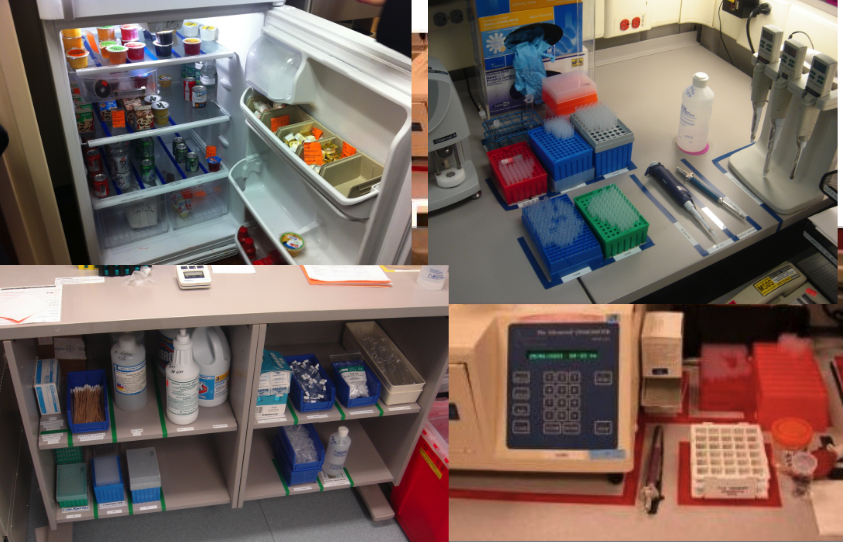
There is probably at least one area of your hospital that could use some reorganization in order to allow better flow and less confusion. Get rid of unused materials. Organize what is left into specific places. Bring in supplies or instruments that you seem to always need, but are never there. Use drawer organizers or small bins. Find a place for everything (the right place!) and put everything in its place. The more frequently used objects should be closest at hand. Clean. Label drawers and cabinets with their contents. Where appropriate, such as the different exam rooms, make similar spaces the same, so there is less confusion between similar areas. Run routine maintenance on any instruments and equipment. Set up a schedule of maintenance for the future. Have staff write the new standard work. Train to the new standard. Sustain the gains.

Photo courtesy of Mark Graban

  1. Train your staff in a new procedure or skill.
Add a new service or, better yet, cross train staff so flow can be maintained or improved, especially at busy times of the day, week, month or year.

  1. Start scheduling gemba walks (or stands) for everyone in the practice.
Sometime during the week, schedule an hour for each staff member and doctor to just watch what goes on in a particular area of your practice. Have them watch the flow and the process. Follow a patient and customer from arrival to departure. What wastes do you observe? What do you learn that you didn’t know before? What problems do you see? What improvements would you and your staff recommend? Then, and this is the most important part, spend time afterwards discussing what you saw and learned. These are sources for improvement projects.

  1. Set up a kanban system to improve inventory or other resource utilization.

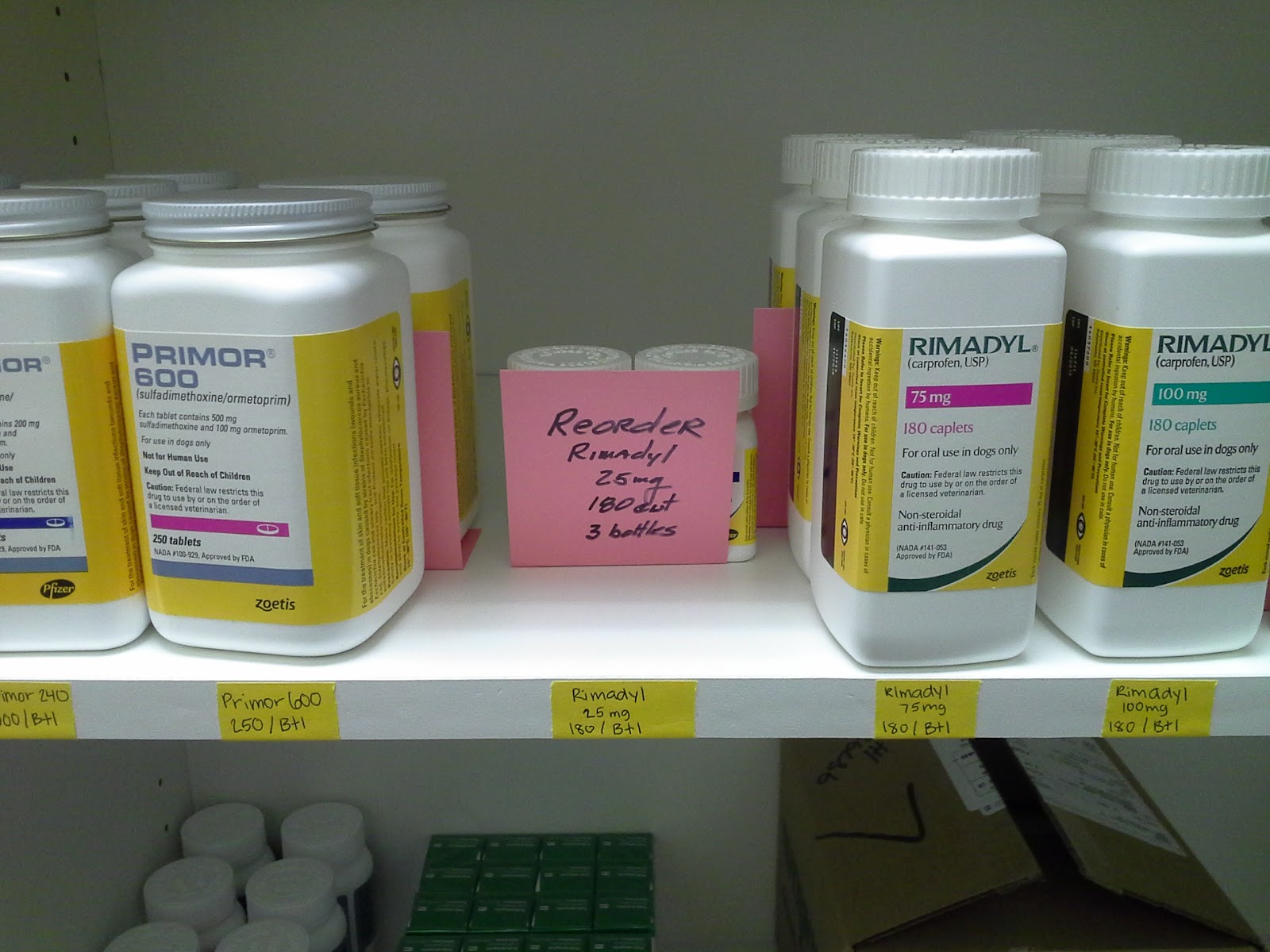
A kanban is a signal. It is part of the Just-In-Time and visual management concepts. The pink kanban card visually signals that this drug needs to be ordered before it runs out. But, only a certain amount.


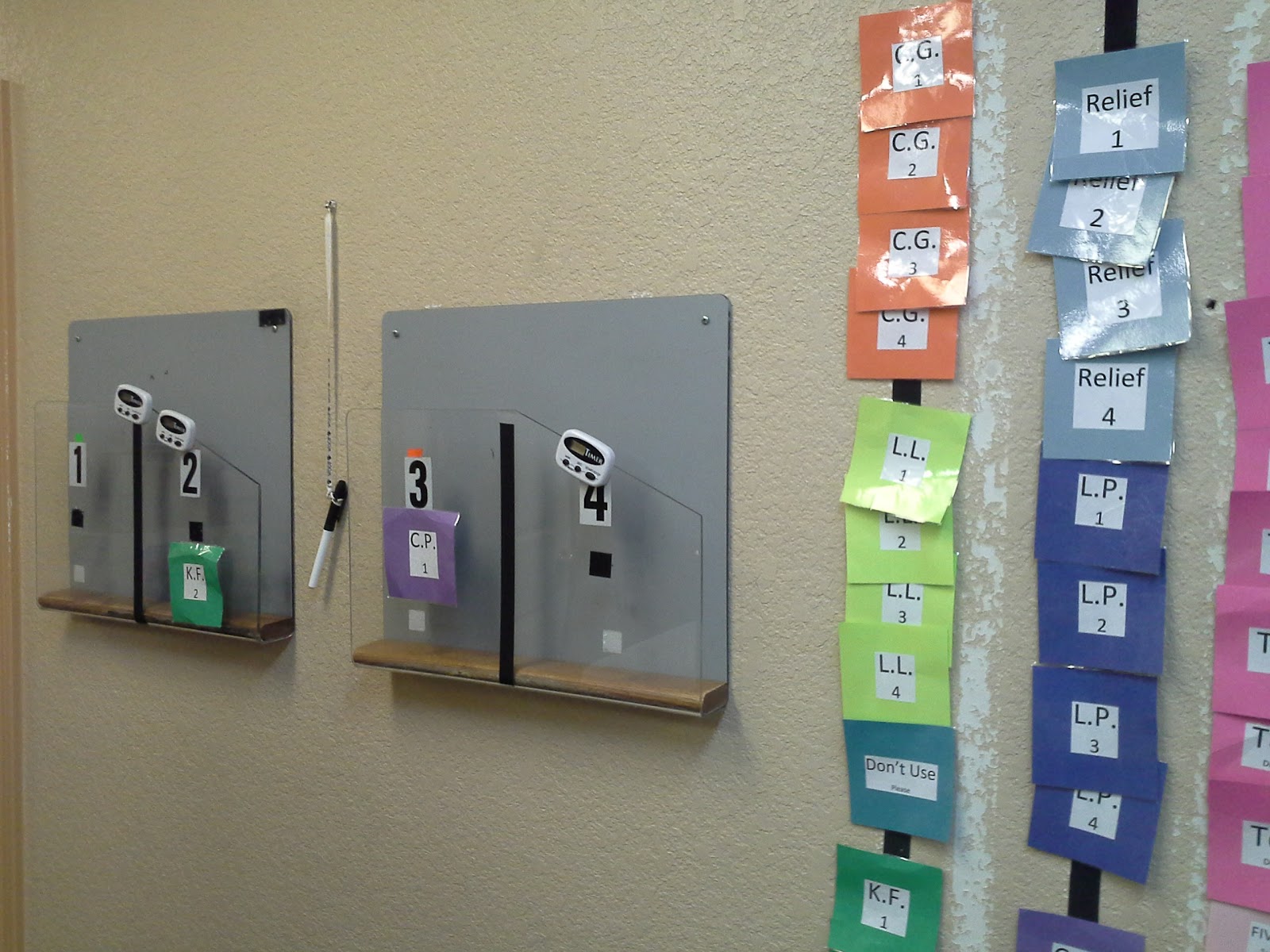
This illustrates a kanban signaling the need for another resource,  a doctor in a specific exam room.


  1. Decrease confusion in some area by working with staff writing Standardized Work.
The first step in improvement is to get everyone on the same page. This is one of the purposes of Standardized Work. Once everyone is “pointed” in the same direction, then improvement can start. It is staff that writes Standardized Work because they know better than anyone what that should look like at the place of work (gemba).

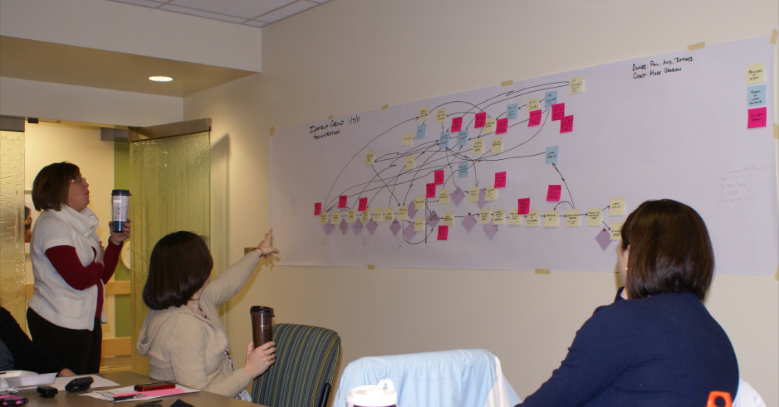
  1. Hold a kaizen event to map and eliminate waste in a value stream.
Photo courtesy of Mark Graban

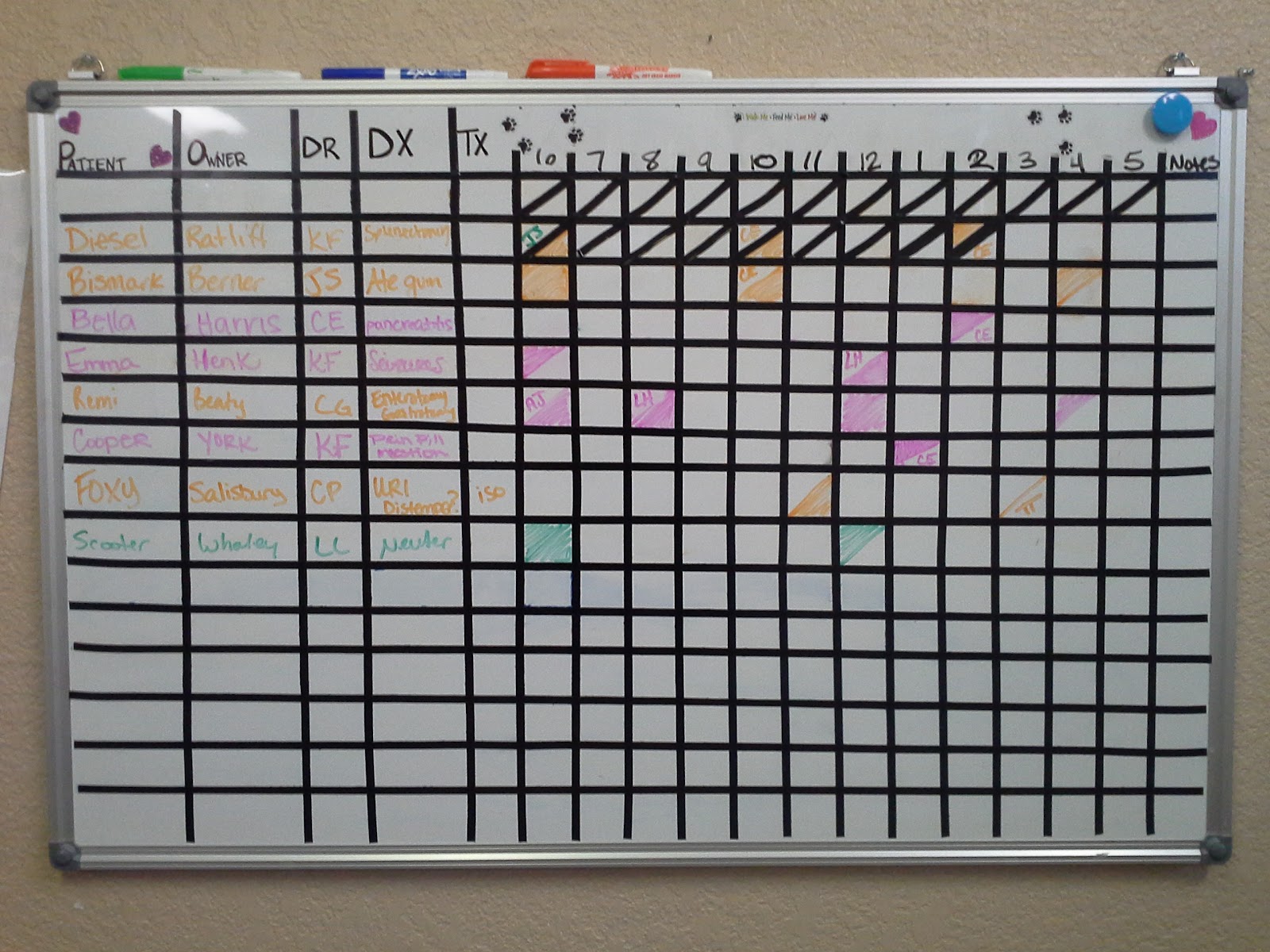
  1. Set up a whiteboard to improve visual management in some area of the practice.

  1. Start a Lean “book club” with staff. Start learning, discussing and experimenting with Lean methodologies and mindsets.
Start with these:
The book that introduced the world to the Toyota Production System.
        Lean Thinking by James Womack & Daniel T. Jones


A very good description of Lean from a human healthcare perspective. 
       
This is my copy of Mark's first edition of Lean Hospitals. As you can tell, I used it extensively. 
                                   
   Lean Hospitals by Mark Graban


The guiding principles behind the Lean system.
                             The Toyota Way by Jeffrey Liker


How Dr. Bahri became "The First Lean Dentist." His concept of 'flow' will change how you think about veterinary practice.
                        Follow the Learner by Dr. Sami Bahri

As you can see, Lean is no longer just for auto companies and other manufacturers. The Lean methodologies have produced incredible gains in virtually every type of business and organization. There is no doubt it can deliver similar results to veterinary medicine. 

  1. Write your “True North” statement and use it.
What would your practice look like if it were perfect or ideal? What do you need to do to start closing the gap between that vision and your current state. What are you waiting for?

Over the past few years, there has been growing evidence that veterinary medicine is becoming too expensive for more and more pet owners. Yes, we deserve to earn in accordance with our education.  And, yes we need to keep up with increased costs. However, I also feel we have neglected our practice infrastructures and systems. We have wandered from the concept of giving value to our clients from their perspective. We need bridge these gaps. We need a new paradigm. We need to, at least, explore Lean as that new model. I am convinced it can get our professional back on track now and give us a structure to adapt and improve ad infinitum. 

What do you think? Let us know. 

Thanks

Sunday, January 1, 2017

Systems, Value, Flow and Respect

Part of the mindset of thinking Lean is seeing and understanding your practice as a collection of systems. Individually, they seem appropriate and functional. However, many times our different systems unintentionally “bump” into each other. When this happens, chaos and waste can result.

Consider this collection of systems found in veterinary practice:

A multi-doctor practice operates on a “base or percent of production” format to pay associate doctors. The base salary is low to encourage production. Very typical within our industry. However, there are some problems.

First, the paperless computer system is slow and the doctors are required to input not only their original medical notes, but also generate any necessary supplementary reports and summaries. 

Tech staff are not allowed to have anything to do with inputting any part of the medical records other than a simple history, primary complaint, weight, temp, pulse and respiratory rate (TPR). They are not permitted to enter any of the physical exam findings, test results, diagnoses (differential or definitive), treatment orders or client home instructions. 

It is estimated that for every minute spent by doctors seeing patients, at least one other minute is needed to perform this non-value adding work.

Appointments are capped at two 20-minute appointments per hour per doctor. By the time the client is checked in by the receptionist, escorted to the exam room by a tech, and subjective information entered into the (sometimes mind-numbingly slow) computer system, the doctor notified of the appointment and briefed, half, or more, of the 20-minute time has passed.

There are four exam rooms for two doctors seeing appointments. The doctors (and, therefore, the exams rooms) are appointed at the same times each hour, i.e. at the :00 mark and at the :40 mark.

Tech staff are not allowed to have anything to do with entering any part of the medical records other than a simple history, primary complaint, weight, temp, pulse and respiratory rate (TPR). They are not permitted to enter any of the physical exam findings, test results, diagnoses (differential or definitive), treatment orders or client home instructions.

Systems thinking. As one can probably figure out, with only 60 minutes in an hour and every 20-minute appointment actually consuming 40, you are 20 minutes behind after the first hour and that increases linearly each hour thereafter. 

The first slot each hour has a 20-minute break afterwards until the next appointment at the last 20 minutes of the hour. However, this appointment butts up against the next first appointment of the next hour. There is no 20-minute “safety” period here.

Over an eight-hour shift, one of two scenarios can result. 

First, this allows twelve of sixteen potential appointments to be professionally serviced appointments per shift. This may be fine provided the takt (basically, the rate of demand) is less than that. But, if you are growing, it means hiring more doctors, thus increased overhead. Hardly in line with “do more, with less resources, with higher quality, and less waste” motto of Lean.

Second, and much more realistic, is that the 16 scheduled appointments will be seen, but many, if not all, of them after the first hour will be seen late. And, the doctor and staff will need to stay almost three hour longer than their shift to finish everything required per appointment. (Or, if the practice is willing to forego 16 appointments per doctor shift, then they concede to only see twelve; a 25% cut in production!).

From an associate doctor’s perspective, who is paid mostly on production, this is a problem. It severely caps their ability to earn income. We talked, in one of the first blog posts, about systems and how workers can be at the mercy of systems in which they have no control.

The associate doctor has very limited control over the systems that affect his/her ability to earn, e.g. appointment systems (number of appointments/hour, who gets which appointments and so on). There are systems that affect the extent to which staff are trained to assist and facilitate, computer systems, HR/payroll systems (contracted production percentage, hours/weeks, time of shifts, days on surgery), etc. Systems are the domain of upper management or practice ownership.

Respect. One of the two main pillars of Toyota and Lean is "respect for people" (the other is continuous improvement). This situation, as described here, is disrespectful to doctors and veterinary technicians. It disrespects doctors by forcing them to spend so much time performing work other than what they are uniquely trained for and can earn from. But, it also disrespects the trained techs that are not being utilized (or trained) to their fullest capacity.

Lean promotes the idea that resources should only be used when they are needed, where they are needed and only in the amount needed. Anything else is waste (muda). Doctors are highly trained, unique resources. Their use should be very purposeful and intentional. The only person in a veterinary office who can diagnose and treat patients, i.e. generate fees, is the doctor. Any other "job" than these should be seriously reconsidered - and maybe assigned to somebody else.

Value. Remember, part of the Lean definition of “value” from the client’s point of view is something they want and are willing to pay for. How much do you think a client is willing to pay for a take home “Examination Report” or a  “Welcome to Our Practice” card handwritten by the doctor they saw? How much do you think they value being able to get in for an appointment and being seen promptly by a doctor, having their pet diagnosed correctly and promptly, and efficaciously treated?

Flow. As I have blogged about before, flow directly and profoundly affects value from the client's perspective. All of the above scenario negatively impact flow. So, value likewise suffers. And this is a form of disrespect to the client.

I spent about five years working for a major corporate veterinary practice. As a solo doctor, I was able to routinely see 35 to 40 patients each day, including six surgeries. One way I accomplished this was by instituting a system of forms and tech training that freed me from much of the medical records input without sacrificing accuracy or neglecting my responsibility for those records. 

I never had any issues with routine audits of my records by my directors and in one of my last years with the practice, was one of the top 20 producers in the entire national practice. 

The vast majority of my time was spent in the exam rooms and surgery doing the work I was uniquely qualified to perform, improving flow and creating value for my patients and clients. But, from my very first days on the job, my practice manager and I invested extensive time and effort in tech training and doctor/tech “choreography.” Staff members are one of the only practice assets that has the potential to appreciate and get better over time.


At left is the simple, quick form I used. I would draw it on the back of the “Permission to Treat” form generated by the front desk whenever a patient was seen so I wouldn't use a new sheet of paper each time.

I divided the sheet into six sections as shown. Each section corresponds to a specific part of a “SOAP” medical record as indicated.

I would write my notes, findings, lab results, differential diagnosis or tentative diagnosis, treatment orders, client instructions and follow ups in the appropriate sections. I then gave the form to the tech on the case for input into the electronic medical record (EMR) and headed off to the next patient with a different assistant. This typically consumed about ten minutes of the 30 minute slot. The tech would then present the treatment plan, collect and/or run any lab tests, give any injections, prepare take home medications, go over home instructions and set follow up appointments. They would also enter the line item fees for invoicing and escort the the client to the receptionist for check out. It was at this point that they would input the EMR, before starting all over with a new client and patient in a different room.

We typically scheduled six or seven 15-minute exams per every two hours of available time, This allowed some flexibility in the schedule as the techs and I “leap frogged” from appointment to appointment. In addition, we tried to only book three of the four exam rooms each hour. If the value stream of an appointment could not be completed within 30 minutes, we asked that pet be dropped off and techs in Treatment took over. I would come back to that patient later, when I had a break between exam rooms.

The understanding (and training, training, training!) was that the techs were to put everything I wrote on the form into the appropriate ”SOAP” section of the EMR. If there was other information or details they felt were important, then they should include that, also. They signed their initials at the bottom and put the form in a specified area on my desk for review and editing later in the day. The final responsibility for the medical records was mine and only mine, as it should be.

We also, at a later date, did away with a separate tech history and tech physical exam. The only history and exam that was important was the doctor’s. The newly available tech time was utilized to input the history, physical exam findings, treatment orders and home care instructions into the EMR in the exam room in real-time as I informed the client.

Note: This is also a good example of Standardized Work!


Tell me what you think. How does this impact your concepts of respect? How much of the daily work in a hospital should staff be allowed to do? Understanding that doctors are ultimately responsible for the medical records, are they the only individuals that can input them into the electronic medical records (EMR)?  What situations have you been involved with where you felt at the mercy of systems; a “catch-22?”  How was it resolved? How many clients actually value “the personal touches,” such as doctor-written welcome cards or examination summary reports vs being able to get their pet seen (and out!) in a timely and cost effective manner? One client out ten; one out of 100; 1000? Where do (would) you balance a conflict between flow and “that personal touch?”

Thanks for stopping by.

Wednesday, December 7, 2016

True North

One of the primary tenets of Toyota and Lean is the pursuit of perfection. That is even the motto for the Lexus brand.

But what does that mean to you, in your practice, with your staff and your clients? What would your practice, in all of its aspects, look like if it was ideal or perfect?  

Forget that perfection is never reached,  This is why Lean is a journey, not a destination.  

What would pet care look like if it were perfect?  What would client satisfaction look like? What would your staff look like if they were able to do work in an ideal way? Challenged? Problem solvers?  Engaged? Continually learning and improving? What  would the physical property look like? In a perfect scenario, would you be helping to improve your profession, your community, or your tiny piece of this world? Write all of this down. This your “true north” statement.

Note that a “true north” statement is not the same as a “ mission”  or a “vision” statement.

“We practice to the best of our ability to help pets have full and healthy lives. We will treat our clients fairly while, at the same time, being fiscally responsible in order to sustain our practice and provide our staff with quality of life and continued employment.”

The first problem with most of these statements are they are too vague. What does “full and healthy” mean? What is “fair?” What is “fiscal responsibility?” What is “quality of life?”

The second problem is once they are written, they are immediately paraded on our websites, printed on our practice brochures, and then promptly forgotten. Can you recite your “mission” statement? Can any of your staff?  

I had a “mission” statement, because that was what the “gurus” said I should do in order to be a progressive manager. Do I remember it? No. Was it a “living” document that defined where I was trying to get on a daily basis? No. Did it define and shape every decision I made? No. Did it give direction to my staff in their improvement efforts? No. What improvement efforts?

A “True North” statement is much more of a “working” document, just as our Constitution and Bill of Rights are “working” documents of ideals that guide our laws and policies. A true north statement generally encompasses the four to six areas of your practice that will form your core, long term goals.

For example, “Patient Care”, “Client Satisfaction”, “Employee Development”, “Fiscal Improvement” and “Community Involvement.” These categories or “focus areas” are not necessarily written in stone. They may change from year to year, but this should be a rarity. Also, one or two additional categories can be added from time to time on a shorter term basis. But, do not let the number get too large as to be unmanageable and overwhelming.

Each of these focus areas usually has a small number of Key Performance Indicators. Note that “key” means two, or three, or maybe four measures that help you gauge your progress and the health of the organization.

It is from these focus areas that one year, five year and ten year strategies and improvement activity plans are developed, all attempting to get closer to your concept of perfection, your “True North.” Note: I mean “yours, “ not the practice down the street or some DVM/MBA in another state or country.  Remember, Lean is about making “your” practice the best ”your” practice it can be, not somebody else's idea of a “cookie cutter” imitation of their model.

For example, suppose senior management decided that for the next year, what we implement for “Employee Development” will be cross-training the staff so that they are capable of covering other positions in times of need or to cover multiple positions within a value stream in order to improve flow. Staff takes it from here. They know best what that should look like at the gemba and they can best work out the schedule. They can decide on the metrics best suited to monitor this process and create the visual management charts so everyone can tell where in the journey the effort is in real time.

The areas of concentration within each category are then introduced to the leads and staff. It is the staff, through a process of nemawashi or consensus (I will explain these terms in a forthcoming blog) building with coworkers and management, that determine the specific projects they feel are a priority based on their experience at the gemba. This process is hansen kanri or strategy deployment, a topic of a future post.


Thanks for stopping by. Please let us know what you think. We haven’t reached perfection, yet.

Wednesday, November 23, 2016

"Pushy" Veterinary Processes

This is a continuation of the previous blog “‘Pushy’ Rescue Groups.” We are revisiting the difference between “pull” and “push” systems.

Veterinary practice is, in general, a “pull” system. Our services are initiated (“pulled”) by the client. We don’t go out and fix random pets and, then, hope one of them belongs to one of our clients! However, we have been talking about “external” customers (clients). Within the value stream, there are “internal” customers as well (the person who does work after you in a process or value stream). It is here that we can suffer from “push” systems.

The Lean concept of “pulling” value within the value stream means that each step in the sequence of treating the patient “flows like a river”, as often gets said in the Lean literature. There should be a person (an “internal customer”) ready to perform Step 2 as soon as Step 1 is finished; Step 3 as soon as Step 2 is finished, etc. through the rest of the value stream. Step X pulls from Step X-1 which pulls from Step X-2 which pulls from Step X-3, and so on back “up” the the value stream. Thus, it is said that ”value is pulled ‘up’ the value stream. If Step 3 is not ready and Step 2 sends the patient on, Step 2 is “pushing” the patient “down” the value stream. Since Step 3 is not ready, the flow of the patient stalls until Step 3 is ready. The patient is essentially “warehoused” and has to wait, which is one the types of muda (waste) that Lean organizations are trying to remove from the value stream in order to improve value to the customer (flow).

On a related issue, Dr. Eliyahu Goldratt put forth the “Theory of Constraints” which, in part, says that if you want to find the “bottlenecks” within a production sequence, look for piles of work in process (WIP) inventory. You should find a “bottleneck” at the next step. Waiting patients and clients are signs of “bottlenecks” in our sequence of production.

Check for yourself. Do a gemba walk; i.e. go to where the work is done and observe the value stream. If you see patients and/or clients waiting, check the status of the next step in the sequence. Chances are something is delaying the progress of that patient/client at that point. Utilizing 5 Why and problem solving methodologies are indicated to fix the issue.

Thanks for stopping by.  If there is a topic you would like discussed, please let us know.

Monday, October 31, 2016

"Pushy" Rescue Groups

I thought I would look, again, at “push” vs. “pull” systems. Though I have written on this topic before, it can be a little difficult to comprehend. What we are really looking at is when the customer enters the value stream.

If the customer comes onto the scene at the end of the value stream, then we are probably looking at a “push” type system. The product is manufactured and sent to market where, hopefully, there is a customer (or millions!) eagerly waiting for the store doors to open in order that they can purchase said product. We don’t identify a particular customer until the end of the process cycle.This system is typically chock full of wasted inventories along with the warehousing costs to store all of it, not to mention the capital tied up until the first sale is made.

On the other hand, if the customer enters the value stream at the beginning, then we are most likely observing a “pull” system. It is a particular customer order that triggers (begins) the manufacturing of that product, at that time, for that customer. This means relatively little inventory, with little to no warehousing and associated costs.

Let’s take, for example, your basic, “walkin’ down the street” rescue group. They go to the local animal control facility where they pick those animals they think (or hope) can be adopted out later. At some point in the future, they take the animal to a veterinarian to be examined, vaccinated, checked for intestinal parasites, tested for heartworms or FeLV/FIV. If the animal is ill or needs other medical attention, then additional visits may be required. At a later time, the intact animals are returned to the vet for spaying or neutering. The veterinarian is, of course, paid for his/her time, drugs, supplies and knowledge; all of this is an investment on the part of the rescue group. In between all of these steps and at the end, the rescue has to “warehouse” all of these pets in foster homes until a suitable adoptive family can be located, if at all, and recoup their costs by charging an adoption fee. This is a “push”system. The customer (adopting family) only becomes known at the end of this value stream.

If the rescue group utilized a “pull” system, the value stream would begin with the adopting family requesting a certain pet; i.e. a certain species, breed, gender, color, age, etc. and then, only then, the rescue group would scour the local “pounds” until a match was found. The pet would go to the vet for any routine procedures or medical care. It would then be given to its new family for an appropriate adoption fee. No warehousing. Any money spent is basically paid for by the adopting family immediately or, at least, much quicker than in the “push” scenario.

In general veterinary practice is a “pull” system, but there are places where we “push”, also. In my next blog, we will revisit the concept of “internal customers” and “pushy” veterinary processes.

Thanks for stopping by. As always, your comments and questions are welcomed.


Tuesday, September 6, 2016

Einstein's Equation of Lean Relativity


No, not Albert Einstein! Moraito “Morey” Einstein, Albert’s third cousin, twice removed on his mother’s side.

Just kidding! However, this, in a simple equation, explains Lean.

“F” stands for Flow and “V” stands for Value from the client’s point of view.

Taiichi Ohno’s equation states:

                                      Capacity = Work + Waste

What this equation states is that there is always waste in our current state. When we remove some waste, we create a new current state, but there is still waste. We pursue perfection, but never achieve perfection.

If we substitute our total “Value Streams” for “Present Capacity” and “Flow” for “Work”, we get:

                                     Value Streams = Flow + Waste

Rewriting the equation gives us:

                                     Flow = Value Streams - Waste


This, then, is essentially what flow means. Flow is all the different processes (value streams) that occur in the management of a veterinary practice with as much waste removed as possible (and then continually improved).

Also, remember that Value is defined as that which a client desires (Dc) and is willing to pay for, that moves (Mp) the patient's condition toward the desired outcome and is performed correctly (without waste; W) the first time.

                                           V = Dc + Mp - W


Everything about Lean is about improving flow, because flow ultimately results in greater value. A3 problem solving, 5S projects, kanban, Just-In-Time (JIT) concepts, error proofing (jidoka), visual management, continuous improvement (kaizen), everything is aimed at pursuing the perfection of flow. We continually improve systems and processes in order to improve flow, and therefore, value. 5S organizes the hospital by removing clutter from work areas, organizing the areas so that they have only the needed equipment close to hand with a consistent place for everything and everything in its place. 5S also makes problems visible, and solving those problems allows us to improve flow.

For example, at our hospital we were constantly having to leave the exams rooms to find this or that item. Not good for flow! So, we went to each of the exam rooms and got rid of duplicate suture scissors, hemostats, tourniquets, etc. Then, the staff and I created a list of the supplies and instruments that we routinely use within the rooms. We chose a roll of tape, Vetrap, cotton swabs, gauze squares, clippers, a small supply of various syringes, a digital thermometer, a Nye tourniquet, a stethoscope, fecal loops, etc. We even put some blood tubes, Idexx spinners, and a bottle of heparin in each room to facilitate quick blood draws for lab tests. Finally, we organized the drawers so that they were the same in each exam room. Now, each room is the same, with the most used resources close at hand. In addition, we all now know, regardless of which room we’re in, that tape is in the right hand drawer and the tourniquet is in the left. There is less confusion. We don't have to think, “This is exam room 1, so the suture scissors are here...no, there...no, in that drawer.” There’s no more time spent searching for items. Also, doctors and/or staff can now quickly (visually) tell if the drawers are complete (standardized). If not, the problem is fixed right then so it doesn't continue to be a disruption. This improves flow, thus value.

Kanban and JIT improve resource utilization by creating a system that provides drugs, supplies, staff schedules and doctor’s time, to name a few, only when needed, where needed and in the amount needed. This frees up cash, space, staff and doctors to do more patient care which improves flow which equates with higher value. Visual management techniques, A3 (PDSA) thinking, and “5 Whys” root cause analysis allow problems to be easily seen and fixed at the root cause(s), again, in order to improve flow and value. Even kaizen, the concept of utilizing our ultimate resource, our staff, to identify and fix problems and remove waste (muda) from our value streams is for the purpose of perfecting flow.

Time is money. And, time spent on wasteful activities and processes is money lost. Everything in our hospital, even wasted items, has to be paid for through income from clients. Otherwise, it comes out of our pockets, our bottom line. Value from the client's perspective means not being charged higher fees in order to cover waste.


All of this, then, is contained in the equation F=V. Simple, right?

The different individual concepts and “tools” of Lean are relatively simple. The difficulty is conceptualizing how the different elements interrelate to create Lean, putting it into operation within your practice and, then sustaining it long enough to get positive results and change the organizational mindset to automatically think Lean. But, that is a different equation and a different blog!

For now, just remember, “it's all about da flow, ‘bout da flow, ‘bout da flow…!“

What are your thoughts? Let us know.

Tuesday, July 5, 2016

Have You Checked Your SMED, Lately!

SMED stands for Single Minute Exchange of Dies. One of Shigeo Shingo’s and Toyota’s greatest gains in increasing flow was figuring out how to change the extremely large, heavy dies used to produce (stamp) the large body parts of different car models quickly. Toyota was able to improve this changeover time for one part to another from an industry standard of many hours (often eight or more) to less than five minutes!

So, what did this allow Toyota to do? It allowed them the ability to make smaller, more efficient, lots of the different models of cars. When you lose a whole day of production to change the dies, you can’t afford to do it very often. Which means, for economy's sake, you need to make large batches (there’s that “b-word”) at one time, which, also, means large inventories of parts, which then need to be paid for and stored at high costs. All very “un-Lean.” Toyota was a small company back then. They couldn’t afford any of that and stay competitive. Plus they had a small market in Japan and had to challenge themselves to produce a high mix of different products.

What did Toyota do? They had a need, a problem, that required a solution. Shingo and the workers got to work using what we’d recognize today as A3 Thinking. They went to the gemba, observed every aspect of the change over, “brainstormed”  possible countermeasures (together), and experimented until they reached their goal, or very close to it, being much better than before.

The equivalent of SMED in veterinary medicine is the time it takes to get an exam room ready for the next patient, or the surgery room ready for the next procedure, after you’re done with the previous. How fast can you go from spay to neuter to dental to cat abscess?

In essence, what we are are doing is looking at the flow between “flows”; identifying the time (delays and activity) between value added operations. A competitive swimmer must perfect his/her strokes and pace, but races can be lost by sloppy "flips" between the laps. So, swimmers must perfect this process, also. How fast can you “reload, aim and get ready to fire, again?” Consider ways to eliminate waste, 5S projects in the exam room or surgery room to facilitate quick change over, standardizes work to get everyone on the same page, and improved resource (doctors, staff, supplies, inventory, etc.) utilization through kanbans (signals).

What does this mean for a vet clinic? For example, could the previous surgery be recovered someplace other than the surgery table? Could a staff member clean and repack instruments while the doctor is busy performing the next procedure so they are ready to be autoclaved later? Could a trained, licensed tech induce anesthesia, intubate and prep the next patient while the doctor is placing skin sutures in the current patient? If so, what safety procedures and standardized work would need to be put in place? In the past, I have allowed trained staff to draw up injectable anesthesia, inject it, intubate the patient and start prepping. BUT, a second trained tech had to verify the proper type and amount of injectable anesthesia, and had to double-check the correct endotracheal tube placement. Any uncertainty or questions resulted in a halt of the process by those involved until verification and resolution by a doctor could occur.

In all of my years of practice ownership and management, I had never thought about, or even heard about, this concept before. That is one of the things that intrigues me so much about Lean. The different perspective and mindset that it brings to the day-to-day practice of veterinary medicine.

So, after some work on improving your value streams, take a look at your own SMEDs. Don’t be embarrassed!  And then, let us know how it went!

Tuesday, June 28, 2016

An Interview with Samantha Parrett: NC State Vet Hospital's Dive Into Lean

I am especially pleased to present this edition of leanvets.com for a couple of reasons.

1)  It is the first podcast for me. Hopefully, others will follow in the future as subject material arises. I debated whether to present this blog as a written interview or as a phone interview. Mark Graban, my “partner in crime” for this thing, convinced me to try a podcast and said he would set it up, which he did. Thank you (again), Mark. (This is also being "simul-blogged" on Mark’s wonderful site, LeanBlog.org). I am so glad we did it this way. I want everyone to appreciate the enthusiasm and confidence about this Lean veterinary success that Samantha brought to the interview, which wouldn’t have been so apparent had we done this in a written, email format.

2) This references, to my knowledge, the first published report of the Lean philosophy and methodologies being applied in the veterinary practice arena. AND… it was very successful.  It has been very difficult trying to educate my profession on the merits of Lean. We’re a stubborn lot, at times. “It may work for building cars and even for human hospitals, but this is veterinary medicine. We’re different! Show me the proof it will work in our profession.”, everyone would say. Well, here’s at least one report that indicates veterinary medicine can benefit from Lean, the same as everyone else who has made the commitment to give it an honest trial.

Our guest today is Samantha Parrett. She is the Director of  Business & Administrative Services for North Carolina State Veterinary Hospital. I first came across NC State’s story, “NC State Vet College Dives Into Lean,” last summer while Mark and I were preparing our lecture for the 2016 TVMA Convention and Expo. I have been waiting eagerly for the opportunity to learn more ever since.

There are several points I would like to draw your attention to. 

First, is the enthusiasm and conviction that comes from trying Lean and experiencing the success that can be realized from Lean. 

Second, Sam mentions many of the Lean concepts and “tools” that we have tried to explain here at LeanVets.com. This demonstrates the “real world” applications of these methods. 

Thirdly, the problem of getting more of the surgeries performed during the normal business hours which had been unsuccessfully remedied for a number of years, finally found some success through Lean. 

And lastly, the positive effect the Lean mindset has had on the staff, doctors and, even, students at NC State Veterinary Hospitals. Lean works...even in veterinary medicine!

Thank you for listening. Here is Ms. Samantha Parrett’s interview.


To read a transcript of the interview,  click here.